
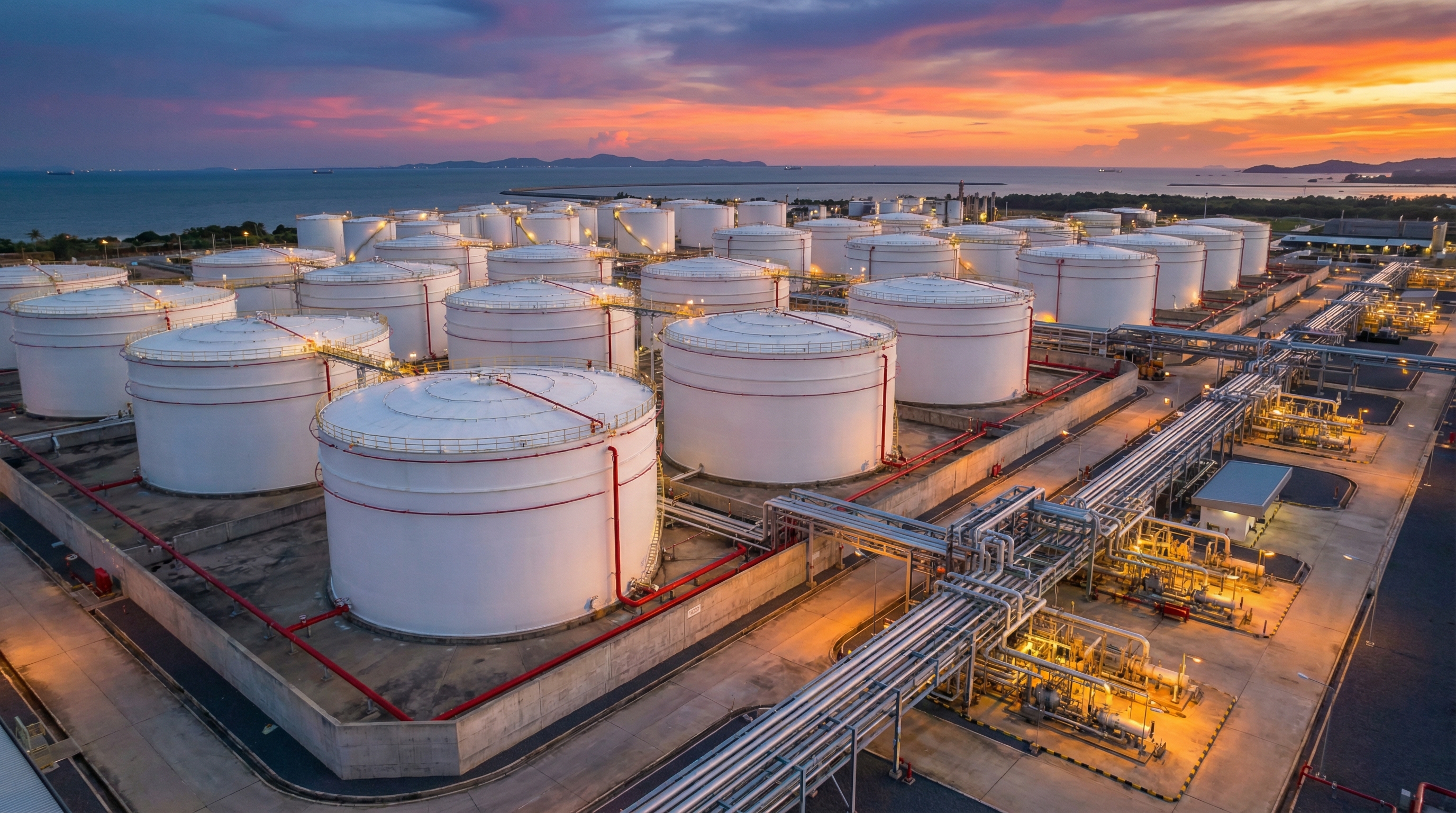
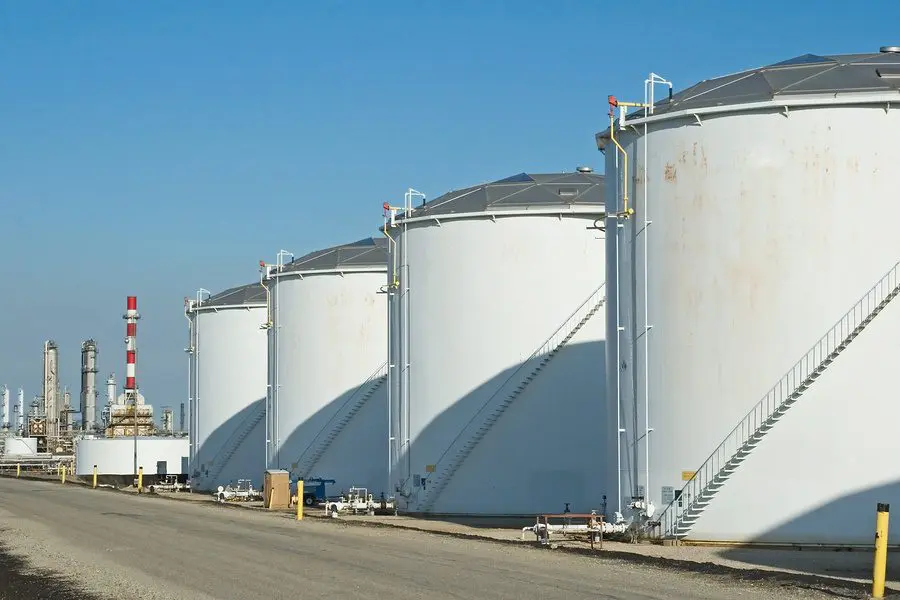
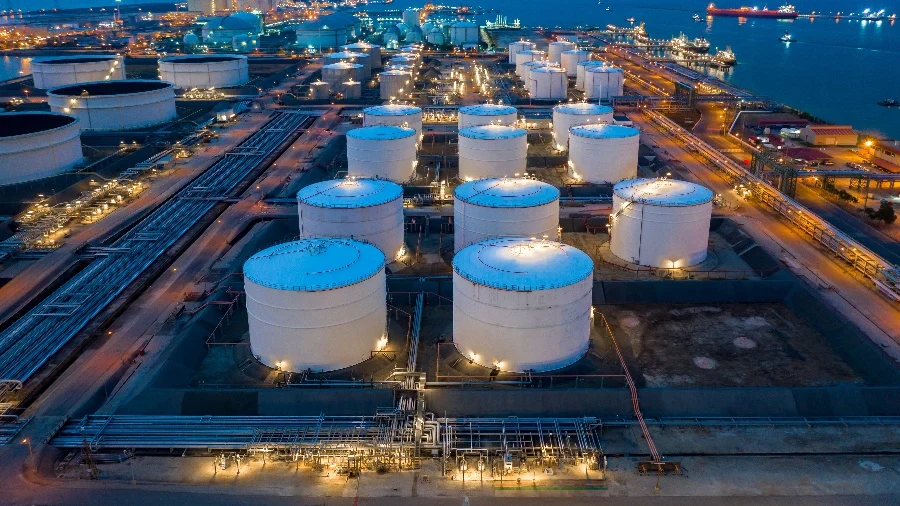
NEO MAKİNA ve MÜHENDİSLİK A.Ş. designs, fabricates and erects API 650 industrial storage tanks and tank farms for crude oil, fuels, vegetable oil, chemicals and water. Fixed- and floating-roof vertical cylindrical tanks from 100 m³ to 50,000 m³ are delivered turnkey with API 650 / EN 14015 structural design, 100% NDT-inspected welding and NFPA-compliant fire protection. Our references include a 33,000 m³ crude oil tank in Kirkuk and 3×5,000 m³ vegetable-oil storage tanks.
Process Compatibility Analysis: Parameters That Define the Design
- Vapour pressure and emissions: Floating roof to prevent evaporation loss on volatile products (crude, gasoline); economical fixed roof on low-volatility products (diesel, water, vegetable oil).
- Flash point and fire safety: Earthing/shunt systems, foam suppression and cooling rings (NFPA 11/15) for low-flash-point products.
- Density: Shell thickness and ring-wall foundation optimised for hydrostatic load with heavy fuels and acids.
- Temperature and viscosity: Bottom heating coils, suction heaters and rock-wool insulation for bitumen, fuel oil and some oils.
- Corrosion allowance: Extra plate thickness or internal epoxy/phenolic lining for 20–30 year economic life; external cathodic protection.
Tank Types
Fixed-Roof Tanks
- Cone roof: Self-supporting or column-supported; standard solution for diesel, water, fuel oil, vegetable oil and chemicals.
- Dome roof: Steel or aluminium geodesic dome; low internal pressure (API 650 App. F) and column-free roofs on large diameters.
Floating-Roof Tanks
- External floating roof (EFRT): Roof moves with the liquid; minimises evaporation loss and fire risk on crude and gasoline; double-deck or pontoon type.
- Internal floating roof (IFRT): Aluminium or steel pan floating under a fixed roof; protects product from weather and brings emissions close to zero.
Fabrication and Site Erection Methodology
- Foundation and civil works: Reinforced-concrete ring wall or compacted-fill foundation per soil survey; leak-detection system and under-bottom cathodic protection.
- Prefabrication: Shell, bottom and roof plates CNC-cut and rolled in the shop; weld-edge preparation.
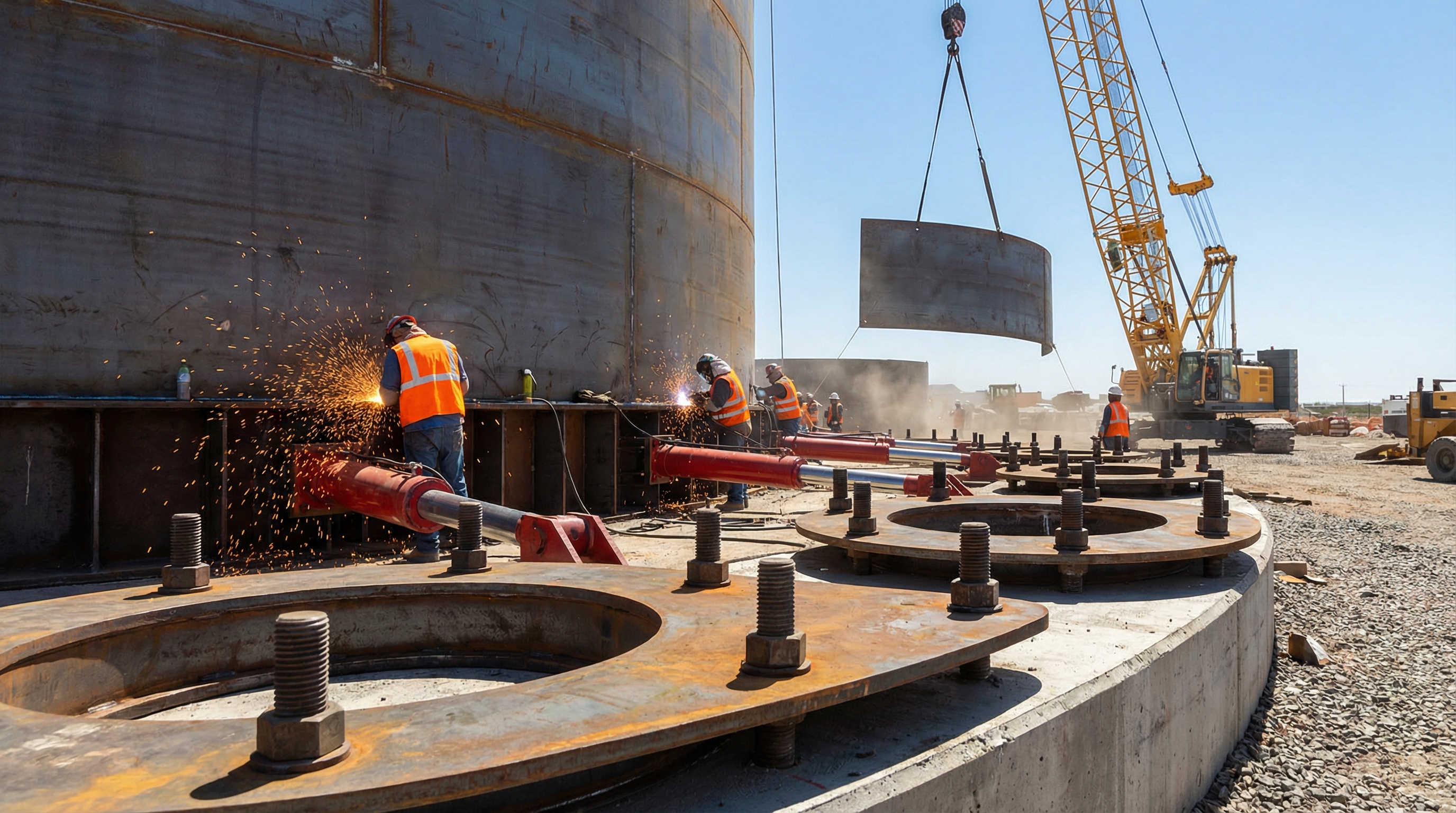
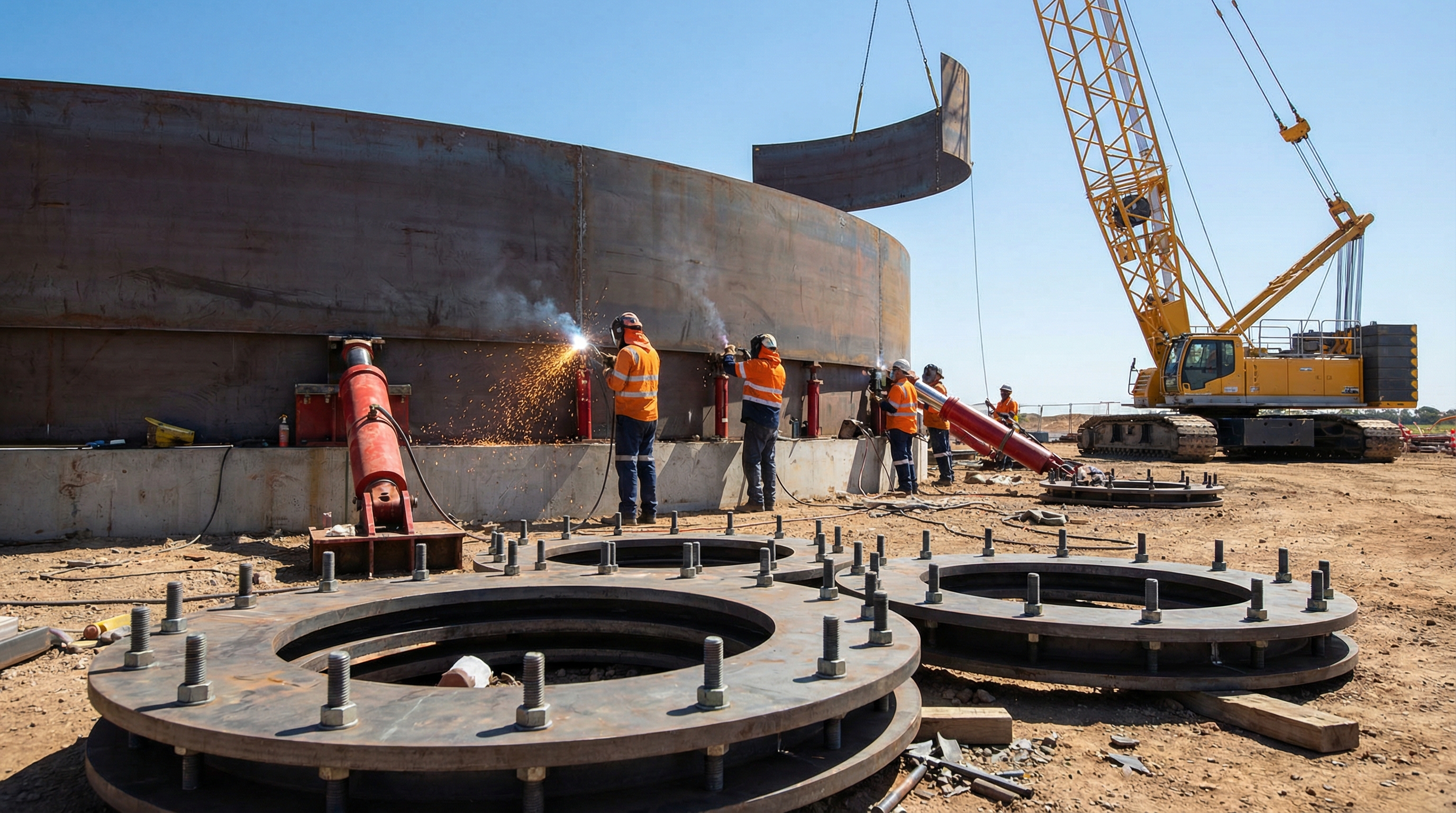
- Site erection: Annular and bottom plate laying; shell raised course by course by hydraulic jacking or crane; roof erection.
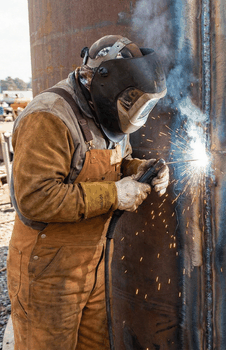
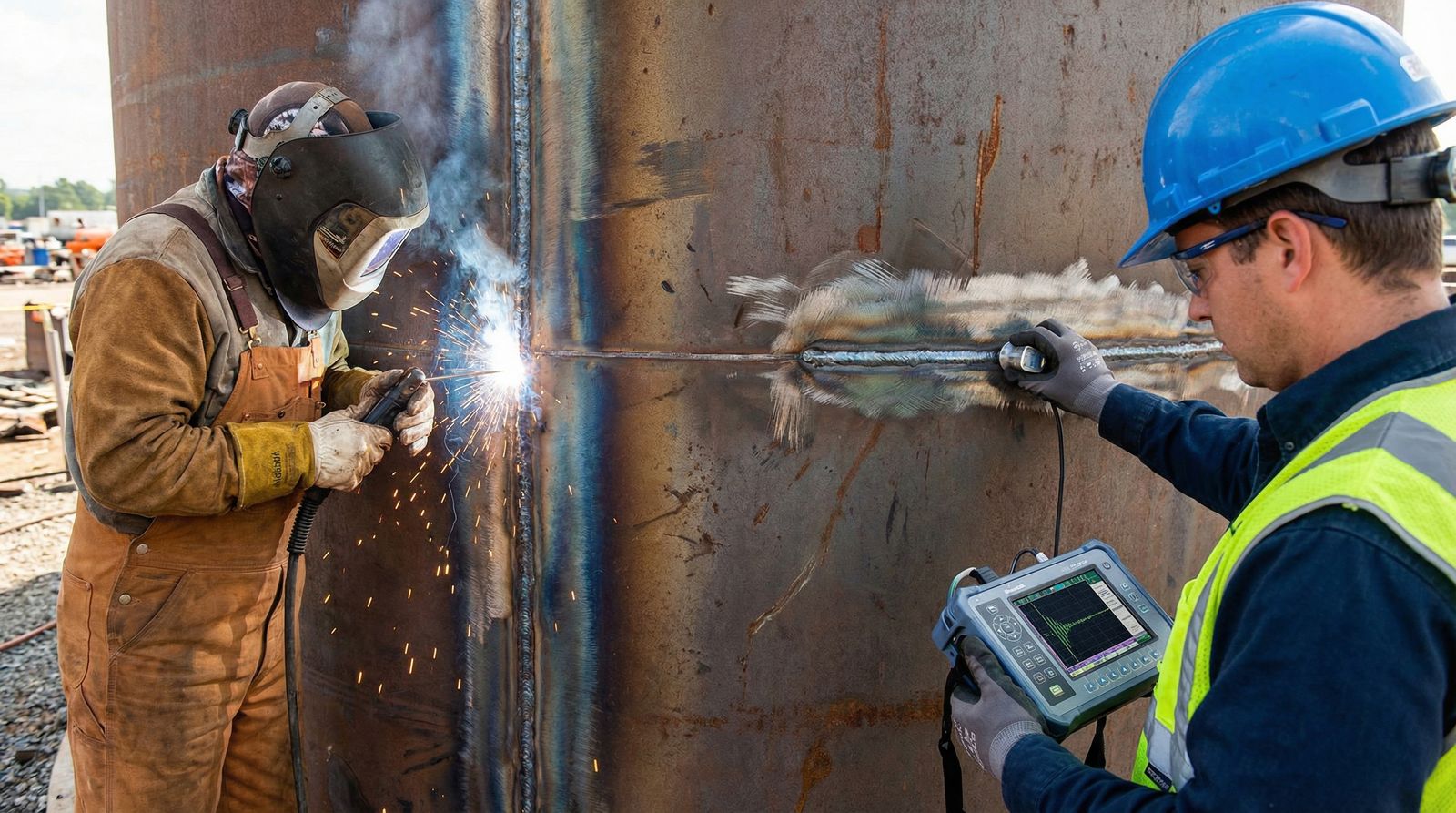
- Welding and NDT: Certified welders (EN ISO 9606), WPS/PQR; radiographic (RT) or ultrasonic (UT) inspection of vertical and horizontal seams, vacuum-box testing of bottom welds.
- Testing: Hydrostatic test, settlement measurements, roof tightness and roundness checks; API 650 acceptance criteria.
- Surface protection: Sa 2½ blasting, multi-coat epoxy/polyurethane external paint; internal lining per product; insulation and cladding.
Tank Farm Auxiliary Systems
- Fire protection: Foam chambers and rim-seal suppression (NFPA 11), cooling sprays (NFPA 15), electric/diesel fire pumps (NFPA 20).
- Piping and transfer: ASME B31.3/B31.4 pipelines, API 610 pump stations, loading arms and vapour recovery units.
- Heating: Bottom coils, suction heaters, thermal oil or steam circuit.
- Automation: Radar level gauging, API 2350 overfill protection (SIL), SCADA/DCS monitoring and inventory management.
- For complete terminal- and refinery-scale facilities see Tank Farm and Refinery Facilities.
Typical Application Range
- Capacity: 100 – 50,000 m³ (single tank); diameter 5 – 60 m, height up to 20 m
- Products: crude oil, gasoline, diesel, jet fuel, fuel oil, bitumen, vegetable oil, molasses, ethanol, biodiesel, chemicals, water and fire water
- Materials: S235JR/S275JR/S355J2 carbon steel, API 650 App. S stainless steel tanks
- Standards: API 650, API 653 (inspection/repair), EN 14015, API 2000 (venting), API 2350, NFPA 11/15/20/30
Why NEO MAKİNA?
Structural design, fabrication, site erection, auxiliary systems and automation are handled from a single source; the most economical and safe configuration is selected for the product. Our overseas site experience (Iraq, Syria, Central Asia) enables erection under demanding logistics and climate conditions. For small and medium tanks see Site Tanks.
Frequently Asked Questions
Fixed roof or floating roof?
Products with vapour pressure above 1.5 psia (10 kPa) (gasoline, crude) need a floating roof for emissions and safety; fixed roof is economical for diesel, fuel oil, vegetable oil and water.
What is the fabrication and erection time?
3–4 months after foundations for a 5,000 m³ tank; 8–12 months for 30,000 m³ and larger. Parallel crews shorten the schedule on multiple tanks.
Do you inspect and repair existing tanks?
Yes. Thickness measurement, bottom scanning, settlement survey and reporting under API 653; bottom replacement, shell-course replacement and floating-roof conversion.
For tank design and a quotation based on your product and capacity, contact us.