
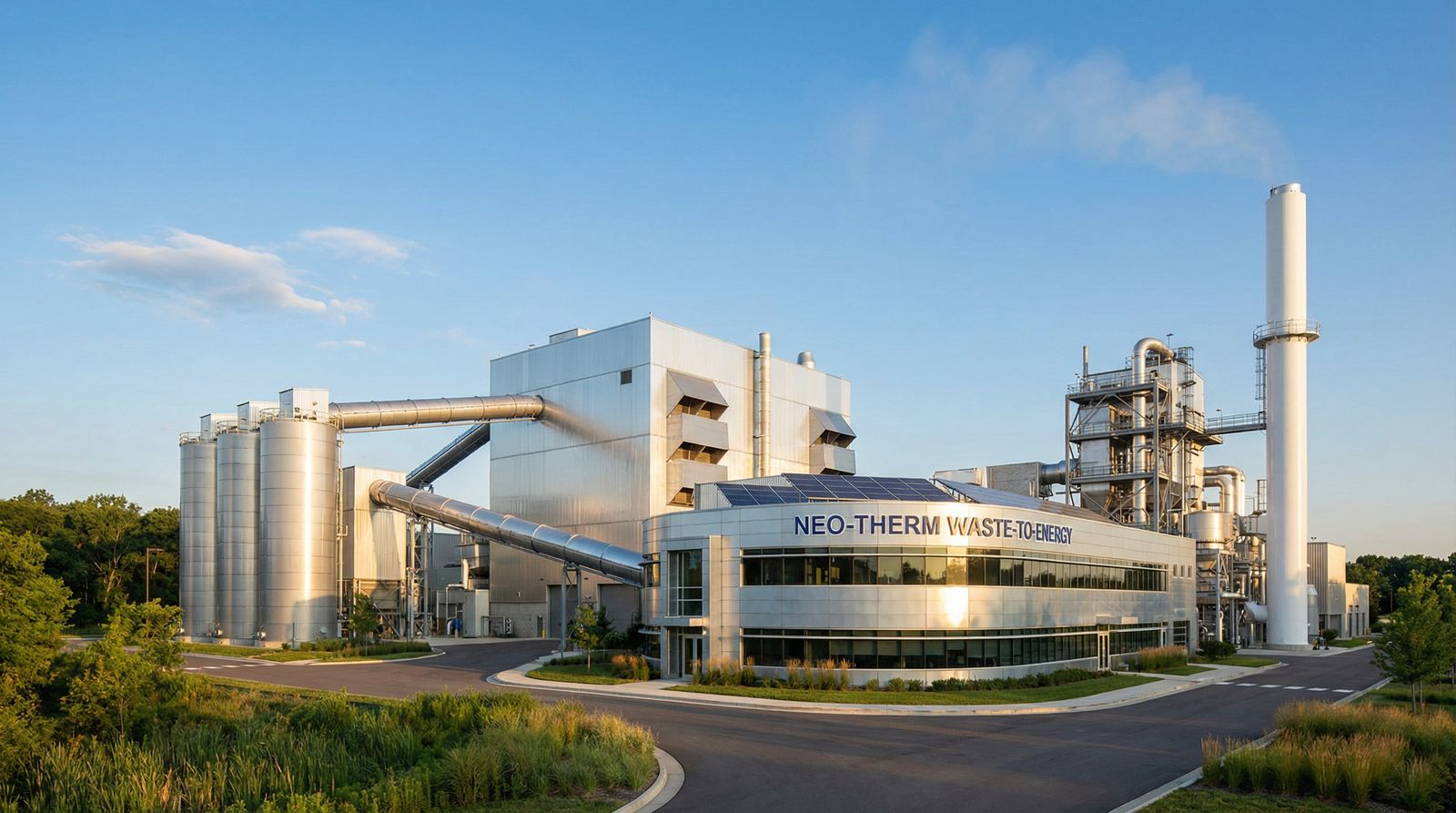
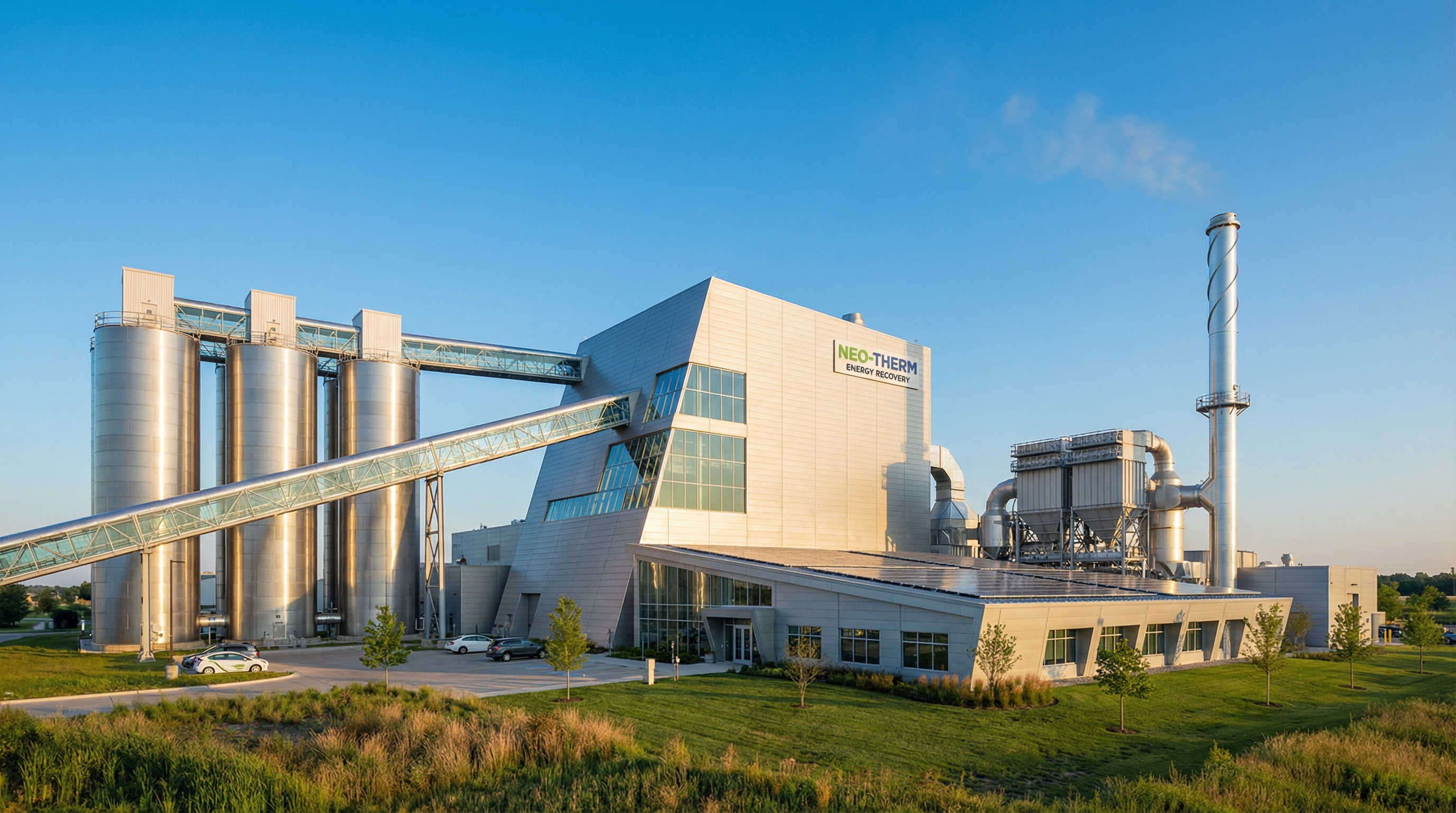
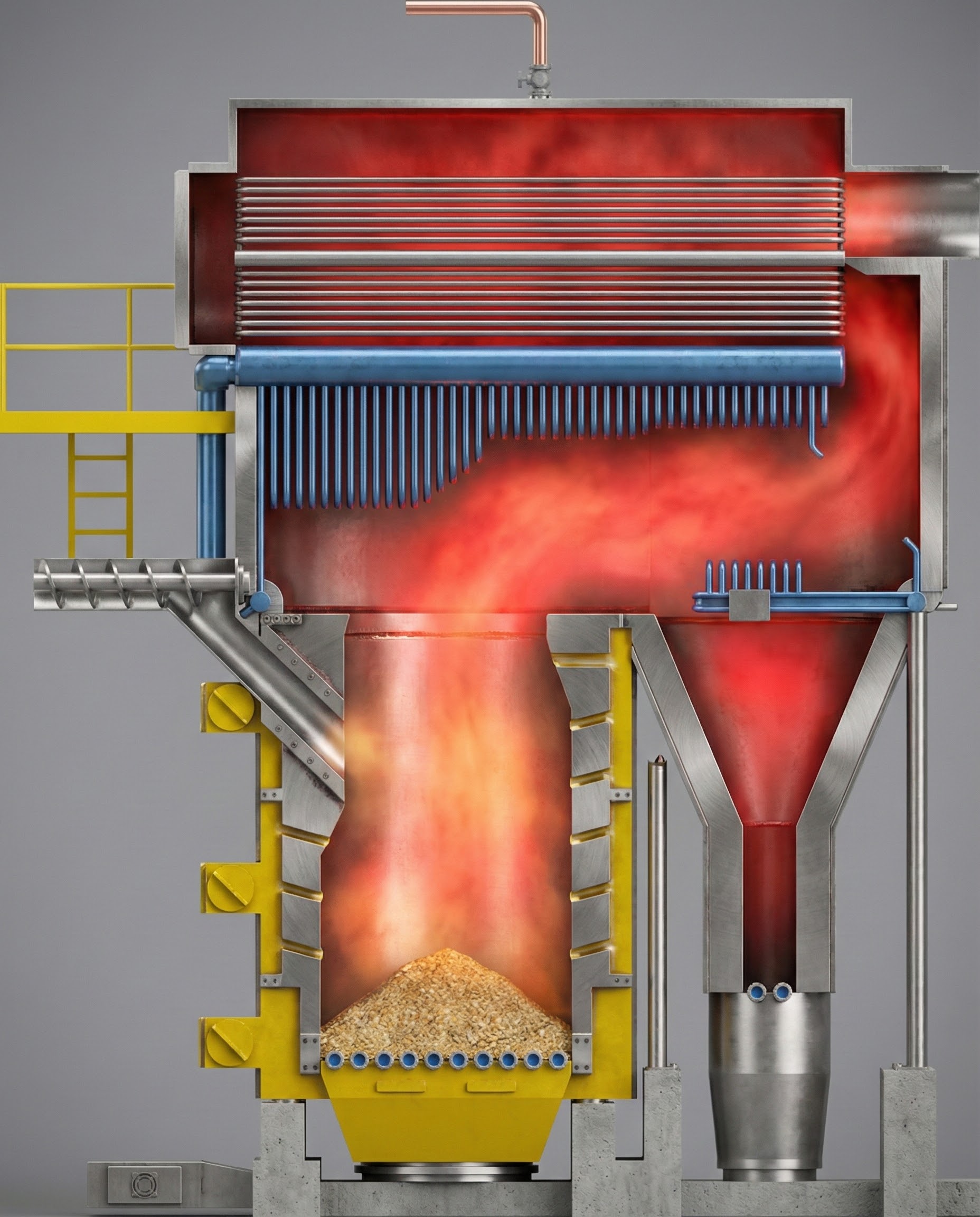
NEO MAKİNA ve MÜHENDİSLİK A.Ş. builds sewage sludge incineration and energy recovery plants that dispose of municipal and industrial sludge in a fluidized bed furnace and convert the released heat into steam and electricity. The integrated plant of drying, combustion, waste-heat boiler and flue-gas treatment reduces sludge volume by 90%, produces inert ash and in most cases runs autothermally without auxiliary fuel.
Why Sludge Incineration with Energy Recovery?
- 90% volume reduction: Wet, odorous sludge that is difficult to store is converted by thermal oxidation into odourless, inert ash usable as secondary raw material in cement and construction.
- Energy generation: The sludge's calorific value (10–16 MJ/kg dry basis) is turned into steam in a waste-heat boiler and, if desired, into electricity via turbine or ORC.
- Autothermal operation: Once dryness exceeds 35–40%, the system needs no natural gas or fuel oil after start-up.
- Regulatory compliance: A permanent disposal route under landfill restrictions and zero-waste targets; designed to national waste-incineration regulations and EU IED limits.
Process Flow: 4 Integrated Steps
1. Sludge Drying
Dewatered sludge (20–25% dry solids) is dried to 40–90% in an indirect disc or belt dryer powered by the plant's own waste heat. Dryer vapours are condensed and sent to treatment with odour control.
2. Bubbling Fluidized Bed Furnace (BFB)
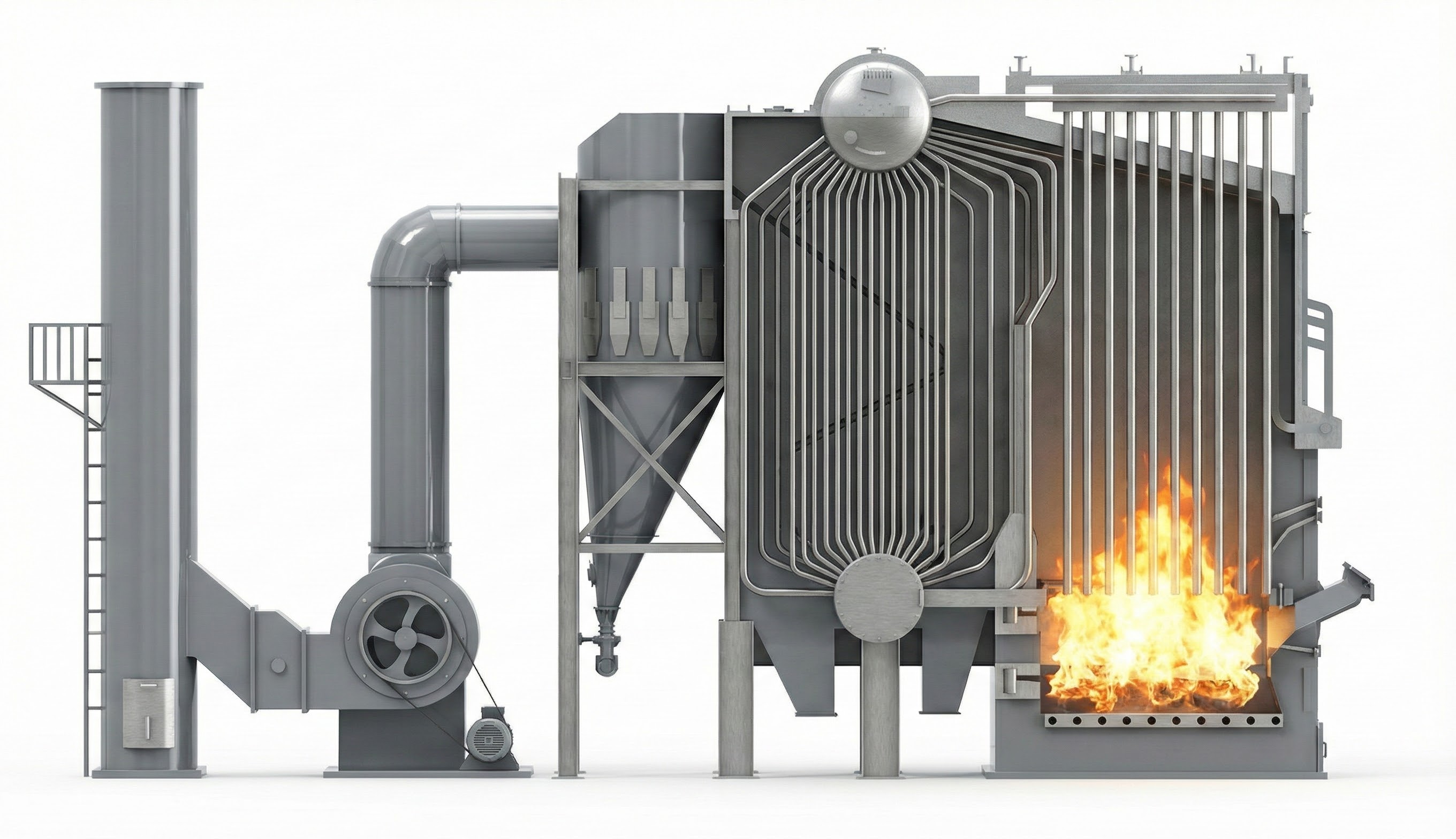
- Operating principle: The silica sand bed at the furnace bottom is fluidized by air from below; sludge is fed into the bed and burns on its own energy.
- Combustion conditions: 850–950 °C bed/freeboard temperature and at least 2 seconds gas residence time prevent dioxin/furan formation.
- Auxiliary burner: Only for start-up and periods of low-calorific sludge.
3. Energy Recovery
Flue gas at around 900 °C passes through a waste-heat recovery boiler (WHRB) to raise steam, used in the sludge dryer, for plant heating or for power generation via steam turbine / ORC unit.
4. Flue-Gas Treatment
- NOx: Urea/ammonia injection into the furnace (SNCR).
- Acid gases (SO₂, HCl, HF): Lime or sodium bicarbonate dosing (dry/semi-dry sorption).
- Heavy metals and dioxins: Activated carbon injection.
- Particulates: Bag filter; continuous emission monitoring system (CEMS).
Typical Application Range
- Capacity: 20 – 500 t/day dewatered sludge (single line)
- Sludge type: municipal sewage sludge, industrial biological sludge, food and paper industry sludges; co-firing with RDF optional
- Energy output: approx. 1.5–3 t/h steam or 0.3–0.6 MWe from 100 t/day sludge (depending on dryness and calorific value)
- Standards: national waste-incineration regulation, EU 2010/75/EU (IED), EN 12952, CE
Scope of Supply
Sludge characterisation and mass-energy balance, technical support for EIA and permitting, process design, equipment manufacture and supply, erection, commissioning, trial operation and operator training are delivered turnkey by NEO MAKİNA.
Frequently Asked Questions
At what dryness does sludge burn autothermally?
Depending on organic content, no auxiliary fuel is needed above a 35–45% dry-solids threshold; the dryer is sized to reach this value.
How is the ash used?
Based on analysis, bottom and fly ash can be used as cement additive, in bricks or as fill material; pre-treatment options for phosphorus recovery are offered.
What is the payback?
Depending on current disposal cost (haulage + landfill), energy revenue and capacity, typical payback is 4–7 years; a feasibility study is prepared at proposal stage.
For plant capacity, energy balance and a quotation based on your sludge volume, contact us.