
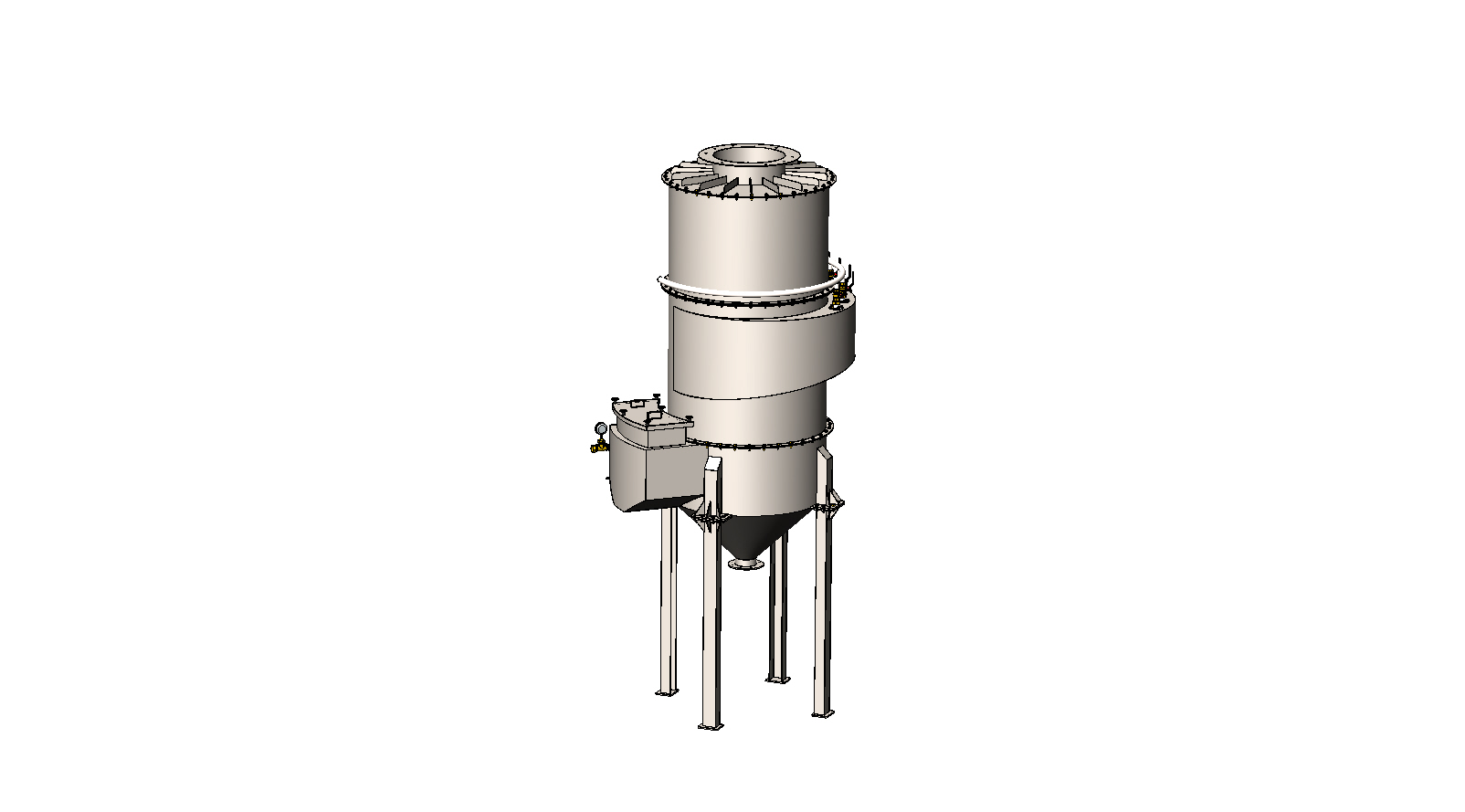
NEO MAKİNA ve MÜHENDİSLİK A.Ş. designs, manufactures and installs waste gas scrubber systems that remove acid gases, odour compounds and soluble pollutants from flue gas. Packed-bed, spray-tower and multi-stage chemical scrubbers bring SO₂, HCl, HF, NH₃, H₂S and VOC emissions below legal limits in chemical, metal-finishing, fertiliser, food, textile, waste-incineration and wastewater plants.
How Does a Gas Scrubber Work?
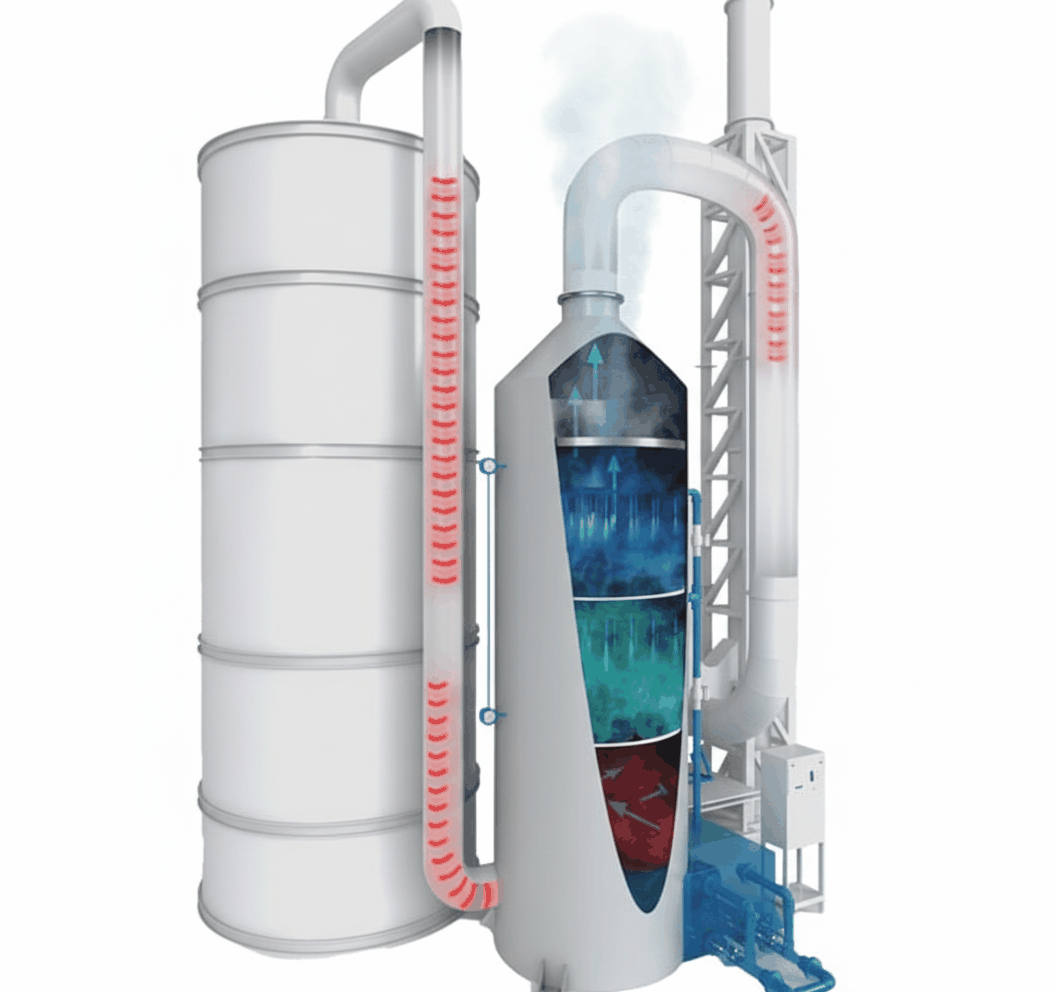
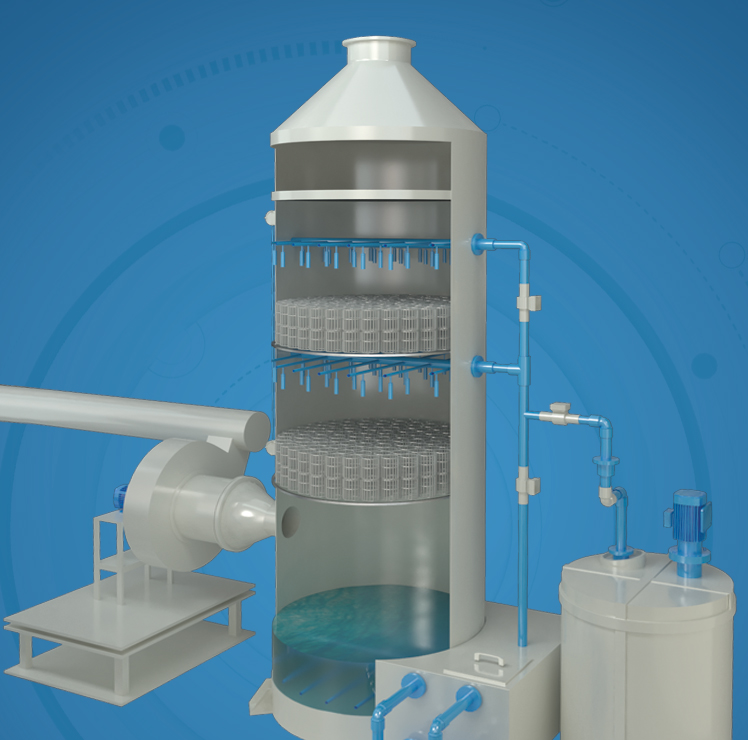
Polluted gas is contacted with scrubbing liquid inside the tower; pollutants are absorbed from the gas into the liquid or neutralised by reaction with the chemical in it. Clean gas passes through a mist eliminator to the stack; the scrubbing liquid is recirculated, chemicals are dosed under pH control and a bleed stream is sent periodically to treatment.
Scrubber Types
Packed-Bed Scrubber
- Large gas-liquid contact area on plastic or ceramic packing; 95–99% removal with counter-current design.
- Standard solution for acid gases (HCl, HF, SO₂), ammonia and odour removal.
Spray-Tower Scrubber
- Fine droplet curtain from high-pressure nozzles; low pressure drop, low clogging risk.
- Quench and pre-wash stage for hot, dust-laden gases.
Multi-Stage Chemical Scrubber
- Acid + alkaline + oxidative (NaOH, H₂SO₄, NaOCl) stages remove H₂S, mercaptans, amines and mixed odour compounds.
- Odour control at wastewater plants, rendering, food and chemical processes.
Venturi Scrubber
- Fine particle and aerosol capture by forcing gas through a narrow throat at high velocity; for wet dust collection see Wet Scrubbing Systems.
Removal Mechanisms
- Absorption: Dissolution of SO₂, HCl, HF in the liquid; solubility increased with caustic (NaOH) or lime milk.
- Chemical reaction: Neutralisation with urea/sodium hydroxide for NOx, hypochlorite for H₂S, dilute acid for NH₃.
- Particle capture: Dust and aerosol settling by droplets (pre-stage).
Materials and Equipment
- Vessel: Polypropylene (PP), PVC, GRP/FRP or stainless steel (AISI 316L, duplex) selected for temperature and chemistry.
- Equipment: Recirculation pumps (1+1), nozzles and distributors, mist eliminator, pH/ORP measurement and dosing units, level and flow control.
- Fan and stack: Corrosion-resistant PP/FRP fan; connection for continuous emission monitoring.
- Automation: PLC with pH-controlled dosing, bleed management and alarms; remote monitoring.
Typical Application Range
- Gas flow: 1,000 – 200,000 m³/h
- Inlet temperature: up to 400 °C (with quench stage)
- Removal efficiency: 95–99% for acid gases, 90–99% for odour (depending on stages)
- Standards: national industrial air-pollution regulation, EU IED/BAT references, EN 1092 flanges, ATEX where required
Advantages and Points to Consider
- Advantage: Several pollutants removed in one unit; design adaptable to different concentrations; simple, reliable construction; low maintenance.
- Consider: Water and chemical consumption and treatment of bleed water must be included in the operating plan; correct material selection is critical for corrosion.
The NEO MAKİNA Difference
Scrubbers are designed by mass-transfer (NTU/HTU) and pressure-drop calculation from gas flow, temperature, pollutant type and concentration. Tower, packing, recirculation, dosing, fan, stack and automation are delivered from a single source; performance is verified by accredited emission measurement after commissioning.
Frequently Asked Questions
Which chemical is used?
NaOH or lime milk for acid gases, dilute sulphuric acid for ammonia, hypochlorite for sulphur odour compounds; selection follows gas analysis.
How much water is consumed?
In a recirculating system consumption equals evaporation plus bleed only; typically 0.1–0.5 L per m³ of gas.
Can it be integrated into my existing stack?
Yes. After checking fan capacity and pressure drop, it is added to the existing flue line with a bypass.
For a scrubber design based on your flue-gas analysis and a quotation, contact us.