
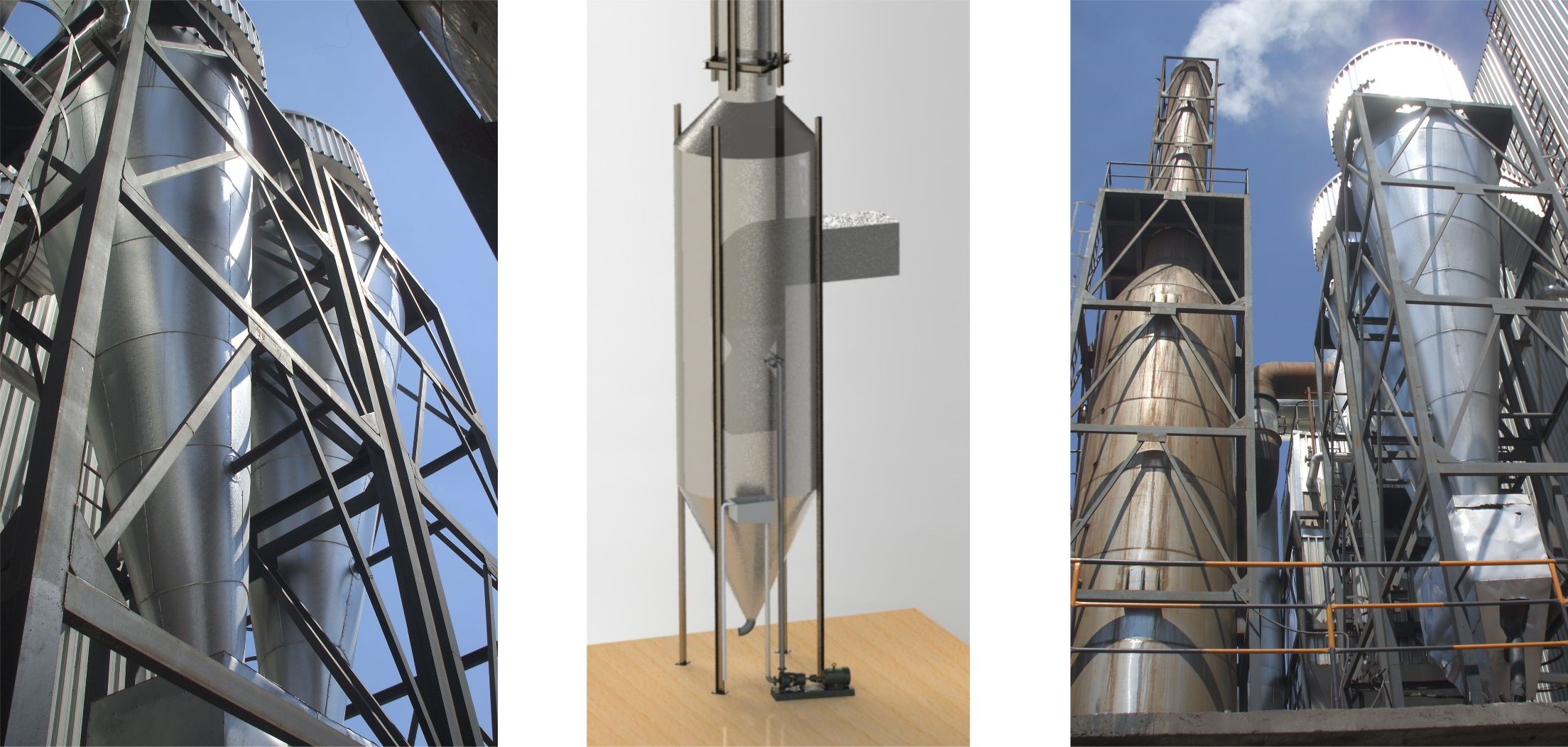
NEO MAKİNA ve MÜHENDİSLİK A.Ş. designs and delivers turnkey flue gas filtration and treatment systems that bring particulates, acid gases and nitrogen oxides from boilers, furnaces and incineration plants below legal limits. Electrostatic precipitator, bag filter, dry/semi-dry sorption, SNCR/SCR and wet scrubbing stages are combined according to fuel and emission target for coal and biomass boilers, waste incinerators, cement, lime, glass and metal furnaces.
What Is Flue Gas Treatment?
Flue gas treatment removes post-combustion pollutants in sequence before the stack. Stages are combined by pollutant: filters for dust, sorbent dosing or scrubber for SO₂/HCl/HF, urea/ammonia injection for NOx, activated carbon for heavy metals and dioxins. The system is monitored by a continuous emission monitoring system (CEMS).
Treatment Stages
Particulate Removal
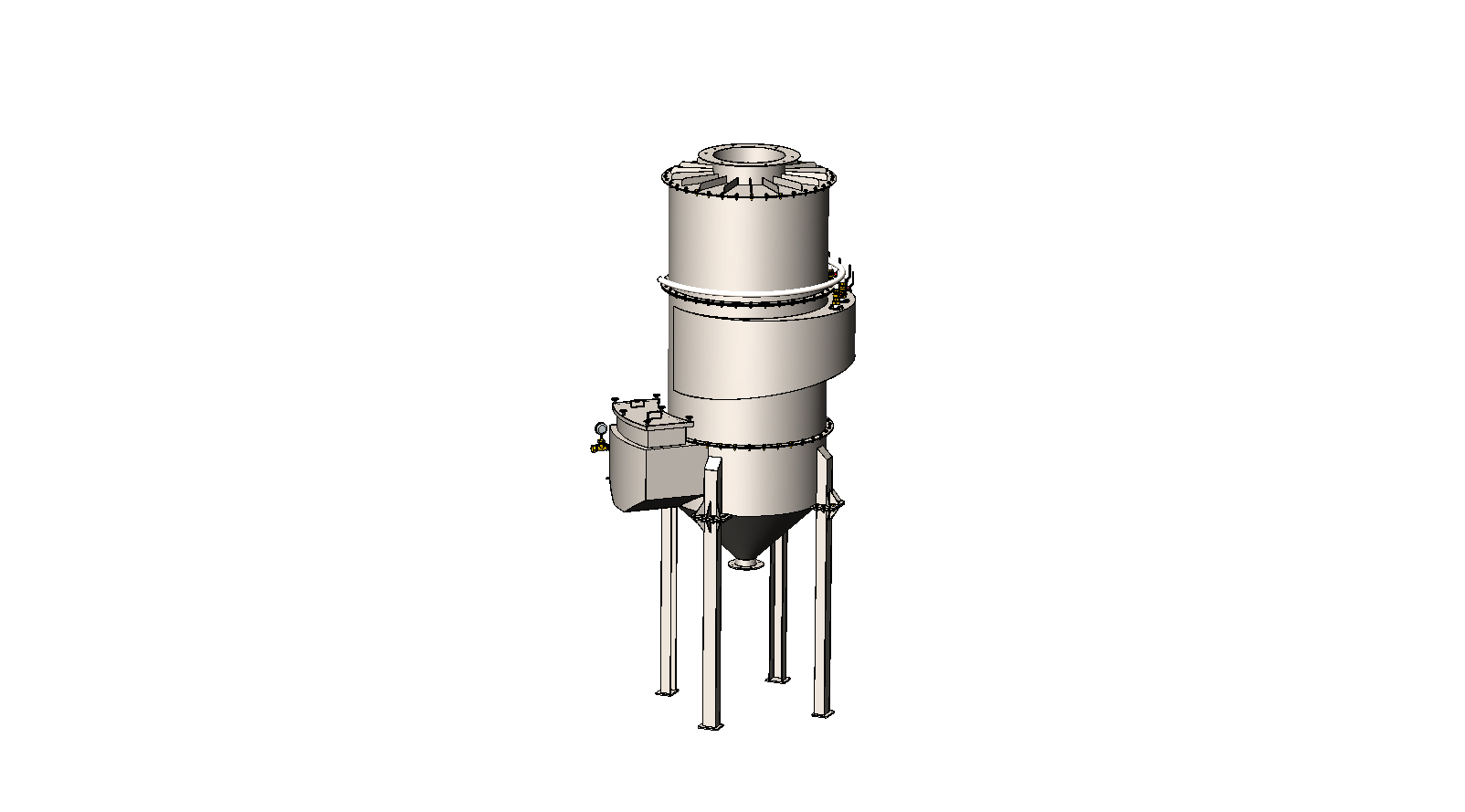
- Bag filter: Jet-pulse cleaned, PTFE/PPS/aramid bags; outlet <10 mg/Nm³; acts as a reactor for acid-gas removal with sorbent dosing.
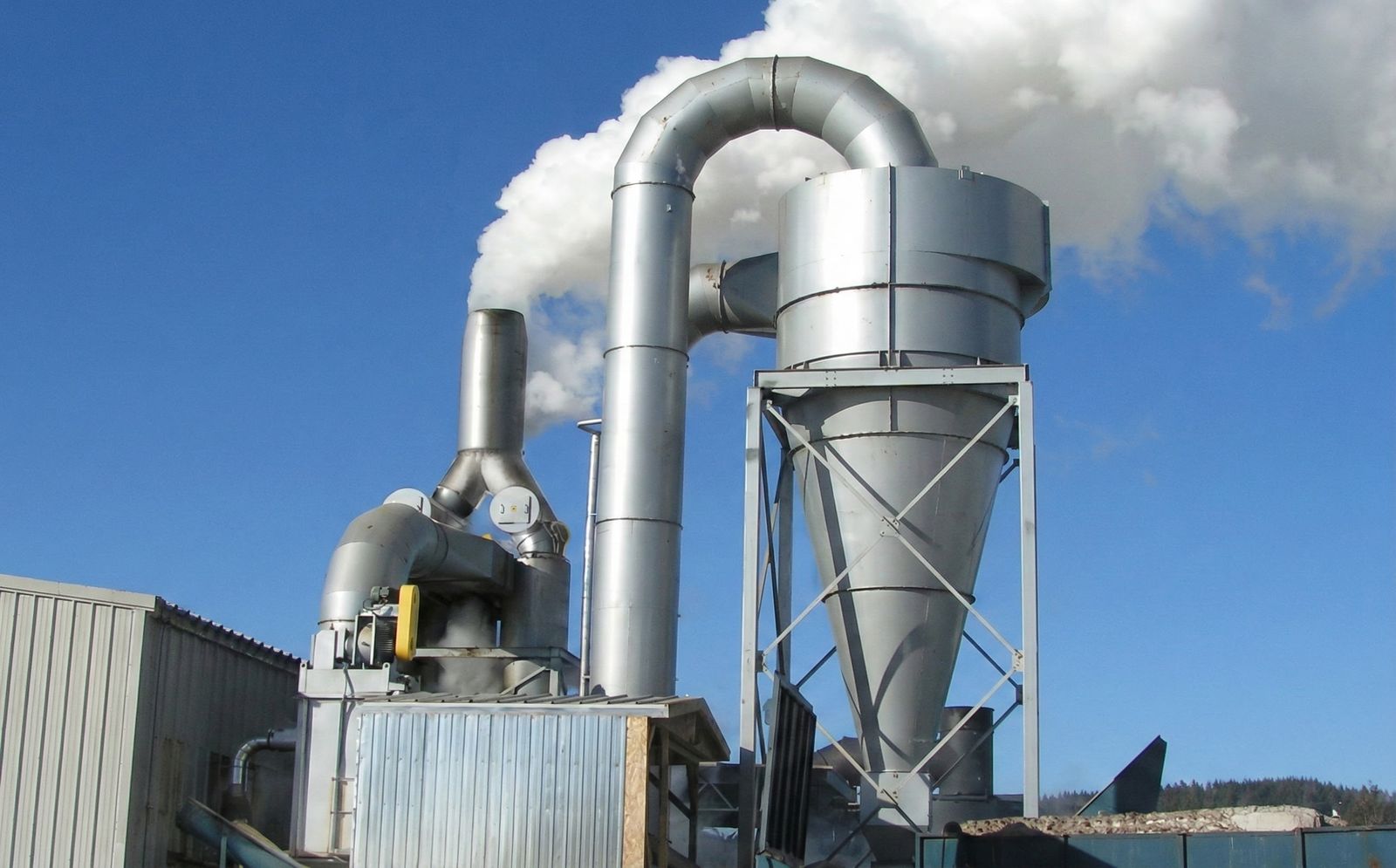
- Electrostatic precipitator (ESP): 99%+ dust capture at high flow and temperature (up to 400 °C) with low pressure drop; cement, lime and large boilers.
- Multicyclone: Pre-separator for coarse dust and sparks; filter protection on biomass and coal boilers.
Acid Gas Removal (SO₂, HCl, HF)
- Dry sorption: Injection of hydrated lime (Ca(OH)₂) or sodium bicarbonate into the duct; reaction in the bag filter; no water consumption.
- Semi-dry (spray absorber): Lime-milk spraying; 90%+ removal at high SO₂ loads, dry product.
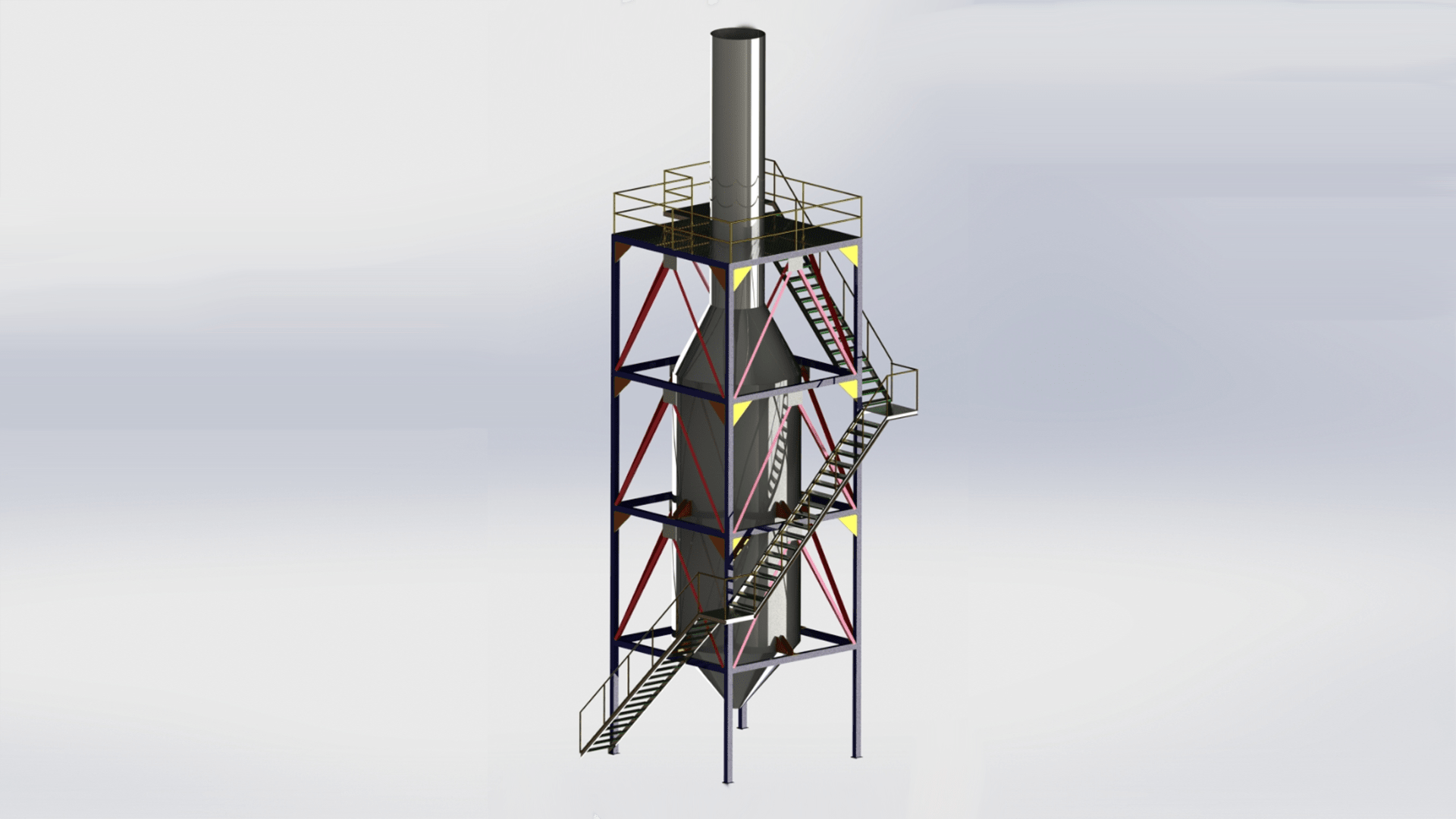
- Wet scrubber (FGD): Limestone-gypsum process for very high-sulphur fuels; 95–99% removal. See Waste Gas Scrubber Systems.
NOx Removal
- Primary measures: Low-NOx burners, staged air, flue-gas recirculation.
- SNCR: Urea/ammonia injection into the 850–1,050 °C zone; 40–70% removal, low investment.
- SCR: 80–95% removal over catalyst at 250–400 °C; for strict limits.
Heavy Metals, Dioxins and Odour
- Powdered activated carbon (PAC) injection for mercury and dioxin/furan capture; standard at waste and sludge incineration plants.
Typical Application Range
- Gas flow: 5,000 – 1,000,000 Nm³/h
- Inlet temperature: 120 – 450 °C (higher with cooling/quench)
- Target emissions (example): dust <10 mg/Nm³, SO₂ <50–200 mg/Nm³, NOx <100–200 mg/Nm³, HCl <10 mg/Nm³ (by regulation and plant type)
- Standards: national industrial air-pollution, large combustion plant and waste-incineration regulations, EU IED/BAT; ATEX
Engineering Approach
- Flue-gas characterisation: Measurement or calculation from fuel analysis of flow, temperature, moisture, dust load and pollutant concentrations.
- Stage selection: The combination reaching the emission limit at lowest operating cost; sorbent consumption and residue calculation.
- Flow design: Duct and reactor CFD analysis, pressure drop, fan and stack draught; dew-point and corrosion control.
- Automation: Sorbent/urea dosing control from CEMS data, differential-pressure and bag-leak monitoring, reporting.
The NEO MAKİNA Difference
Firing system and flue-gas treatment are engineered by the same team; primary measures (combustion optimisation) and secondary treatment are addressed together to lower investment and operating cost. Retrofit solutions are offered for capacity increases and compliance with new limits at existing plants. Survey, design, manufacture, installation, commissioning and accredited emission measurement are included.
Frequently Asked Questions
Bag filter or ESP?
A bag filter gives lower emissions and acid-gas removal with sorbent; an ESP offers low pressure drop and operating cost at high temperature and very high flow.
Dry or wet treatment?
At moderate sulphur loads dry/semi-dry sorption is sufficient without water consumption; wet FGD is preferred for very high SO₂ and 98%+ removal targets.
Can treatment be added to my existing boiler?
Yes. After flue-gas measurement, filter, sorbent dosing and SNCR are retrofitted to the existing flue line; fan and draught are recalculated.
For treatment-stage selection based on your flue-gas data and a quotation, contact us.