
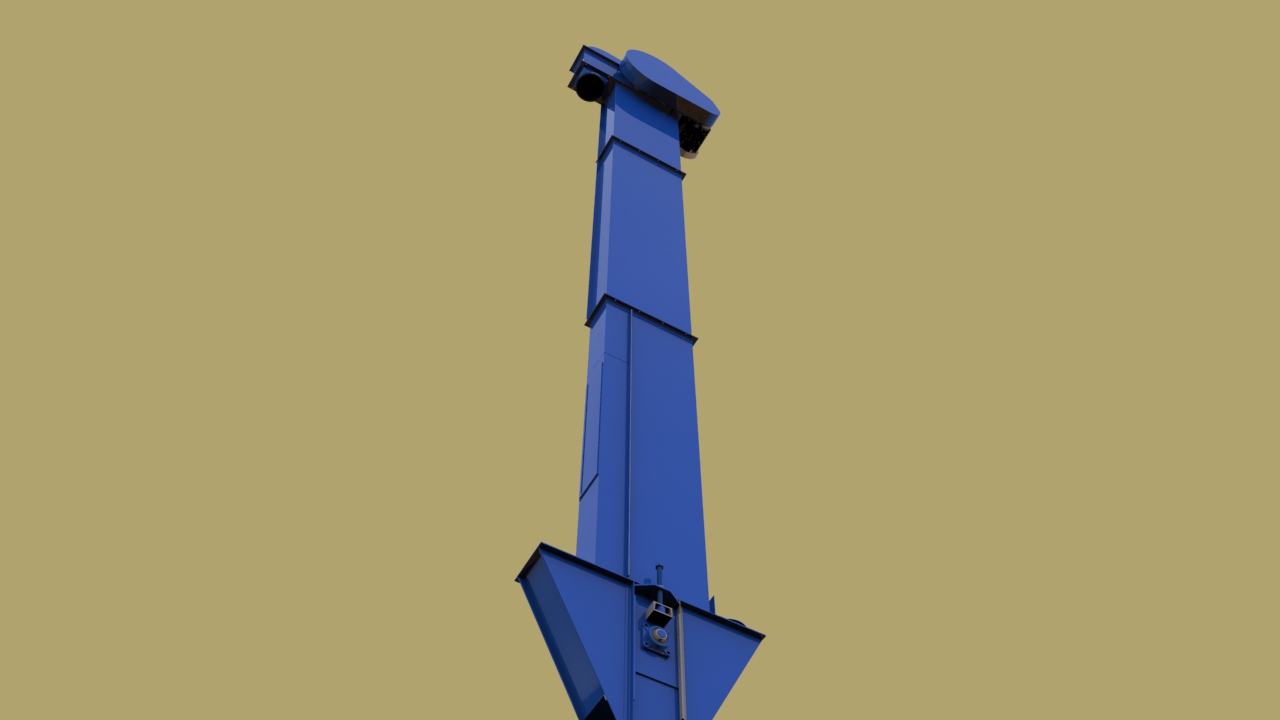
NEO MAKİNA ve MÜHENDİSLİK A.Ş. designs and manufactures bucket elevator conveying systems for vertical handling of powders, granules, grain, coal, cement and bulk chemicals. Belt and chain elevators run safely and continuously at 5–500 t/h and up to 50 m lift with dust-tight casings and speed/misalignment monitoring. They are the standard vertical conveying solution for silo feeding, crusher and screen lines in food, feed, mining, cement and power plants.
How Does a Bucket Elevator Work?
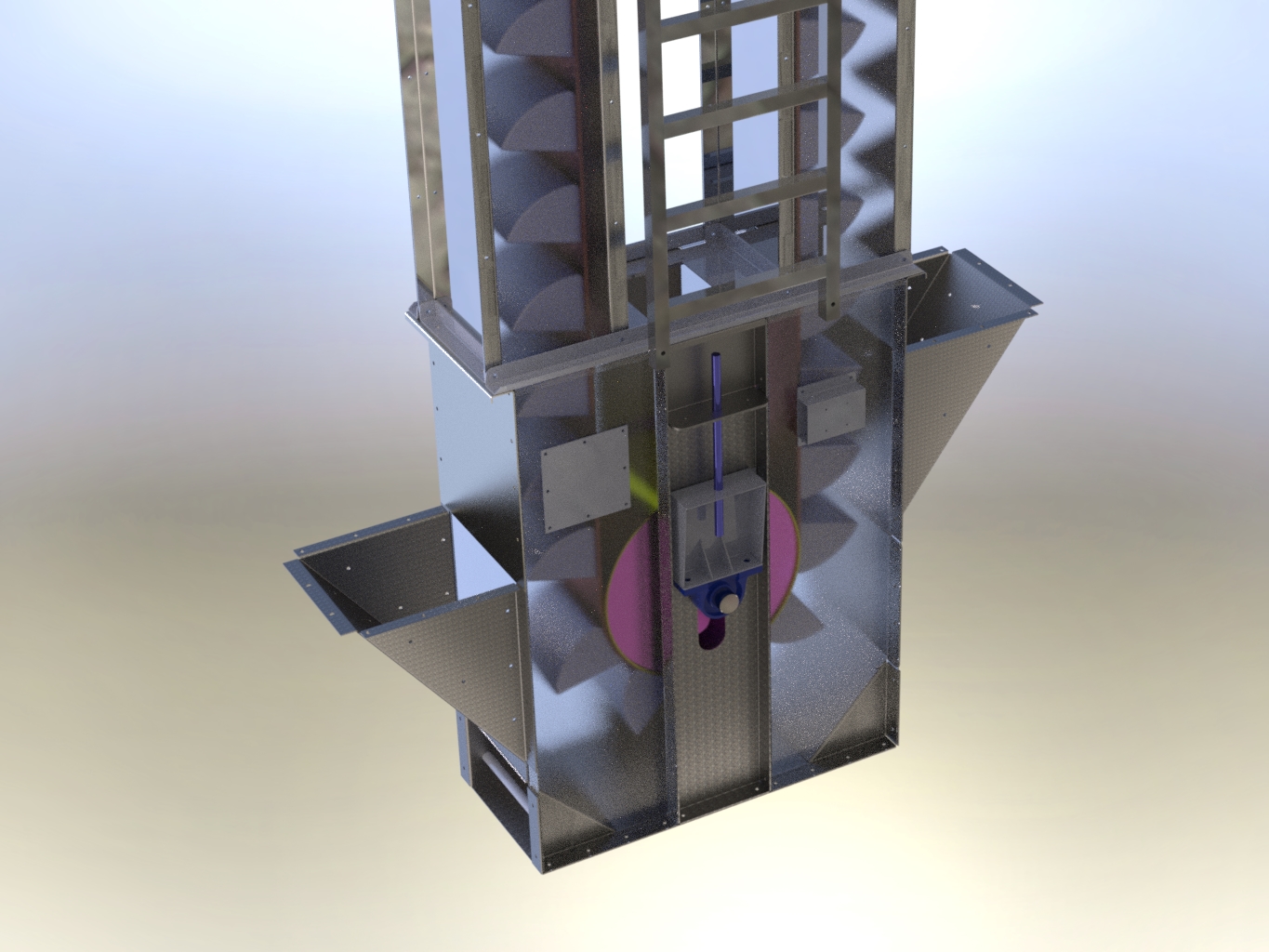
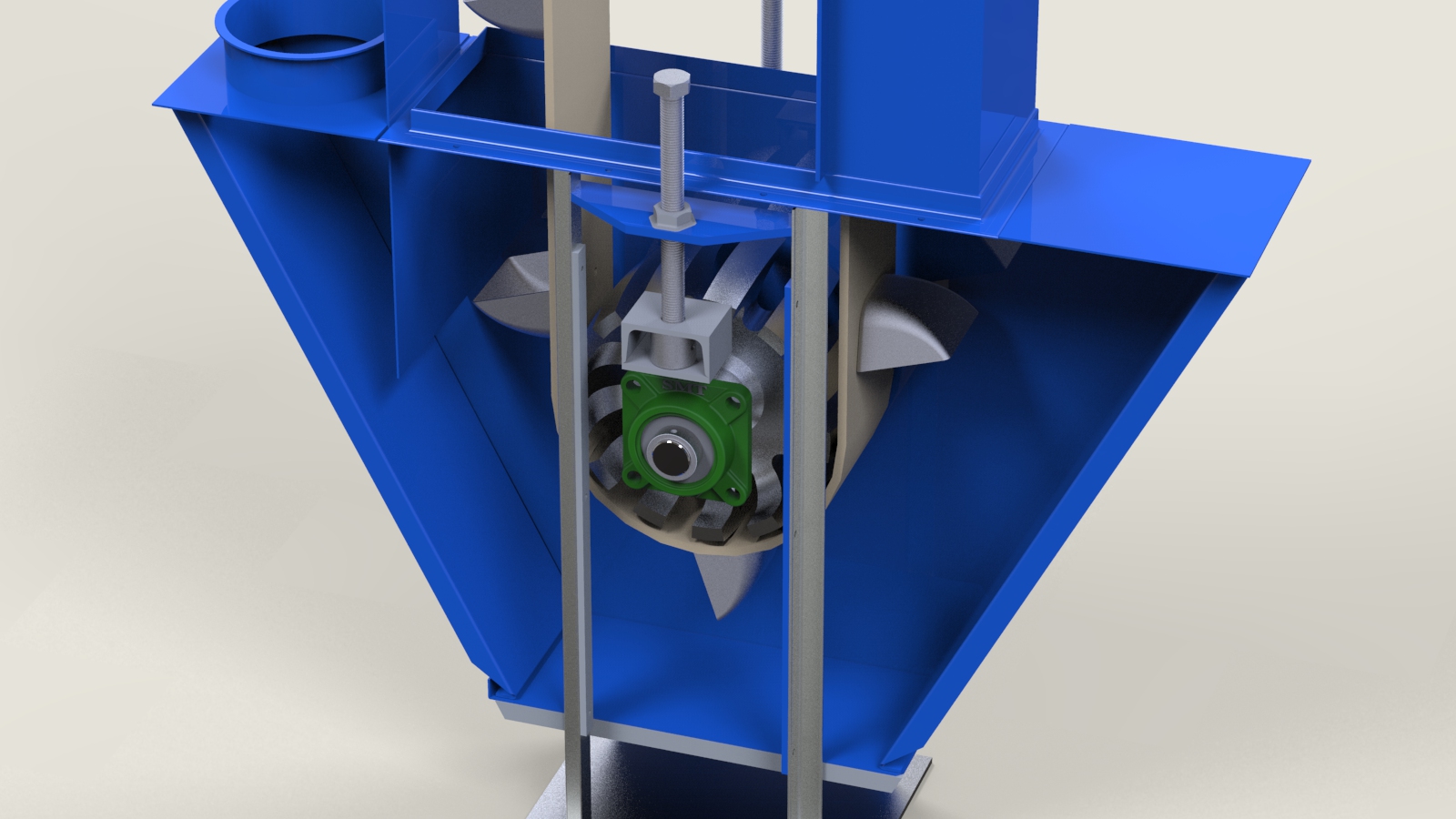
Material is fed into the elevator boot; buckets attached to a belt or chain scoop it up, carry it to the head and discharge it through the outlet by centrifugal force or gravity over the head pulley. Speed, bucket spacing and discharge type are selected for the material's particle size, density and flowability.
Elevator Types
Belt Bucket Elevators
- Speed: 1.0 – 1.5 m/s (centrifugal discharge); high capacity, quiet operation.
- Application: Free-flowing, moderate-temperature (≤ 120 °C) materials such as grain, flour, feed, sugar, fertiliser, cement, dry sand.
- Belt: Oil-, wear- and heat-resistant EP or special rubber belt; FDA-approved option for food.
Chain Bucket Elevators
- Speed: 0.3 – 0.8 m/s (gravity or continuous discharge); heavy duty.
- Application: Abrasive, coarse or hot (up to 400 °C) materials such as clinker, ash, lime, ore, coal.
- Chain: Single or double strand, heat-treated alloy chain; automatic take-up.
Technical Specifications
- Capacity: 5 – 500 t/h (by material and bucket type)
- Height: 5 – 50 m; higher with special design
- Bucket types: Pressed steel, stainless steel, cast steel (abrasive), HDPE/nylon (food, non-sparking)
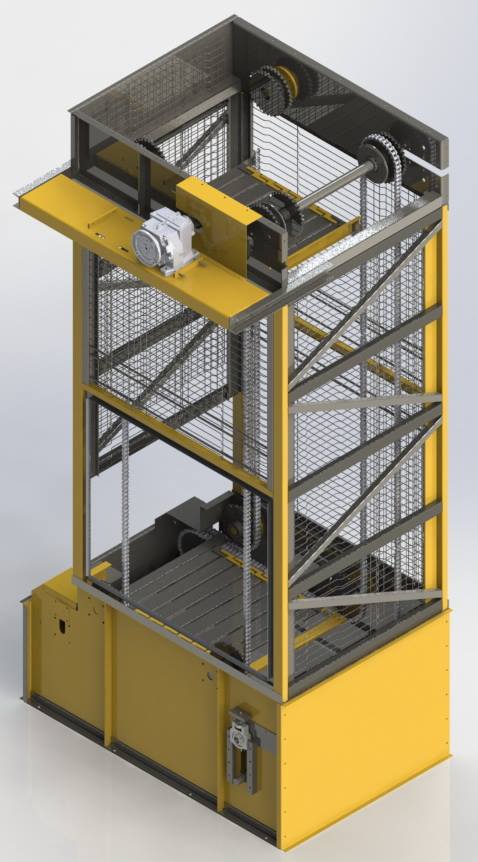
- Casing: St 37 or AISI 304/316 stainless; modular sections, inspection and cleaning doors
- Drive: Gear motor, backstop, variable-speed control
- Safety: Speed sensor, belt/chain misalignment sensor, boot level switch, bearing temperature monitoring, explosion vents and earthing (ATEX)
Engineering and Design
- Material analysis: Belt/chain, bucket and speed selected from bulk density, particle size, moisture, temperature and abrasiveness.
- Structural verification: 3D CAD modelling, finite element analysis (FEA) of casing and tower; wind and seismic loads.
- Vibration and dynamics: Pulley and shaft calculations, resonance check, long-life bearings.
- Application-specific solutions: Replaceable liners and cast buckets for abrasive material; heat-resistant seals for high temperature; food-grade materials and easy-clean design for hygienic duty; ATEX-certified equipment for explosive atmospheres.
Applications
- Food and feed: grain, flour, sugar, spices, pellet feed silos
- Cement, lime and mining: clinker, limestone, ore, sand
- Energy: coal, biomass, ash and RDF feeding
- Chemicals and fertiliser: powder and granular products
- Standards: CE Machinery Directive, EN 618 (continuous handling safety), ATEX 2014/34/EU
Why NEO MAKİNA?
Elevators are engineered together with the plant's silo, screen, crusher and dryer line and installed turnkey including tower, platforms and ladders. Existing elevators are modernised with capacity upgrades and belt/chain and bucket renewal. For other conveying solutions see Mechanical Conveying Systems.
Frequently Asked Questions
Belt or chain elevator?
For free-flowing, fine, moderate-temperature material the belt elevator is cheaper and faster; for abrasive, coarse or hot material the chain elevator is preferred.
How is capacity calculated?
Bucket volume × fill factor (60–85%) × buckets per metre × speed, converted to t/h with material density. The calculation is provided at proposal stage.
How is dust-explosion risk managed?
For explosive dusts such as flour, sugar and coal, ATEX-compliant design uses antistatic belt, non-sparking buckets, speed/misalignment monitoring, explosion vents and earthing.
For elevator selection and a quotation based on your material and lift height, contact us.