
NEO MAKİNA ve MÜHENDİSLİK A.Ş. designs and manufactures industrial reciprocating grate combustion systems (moving step grates) for coarse, wet and heterogeneous fuels. A robust solid-fuel firing solution for steam, thermal oil and hot-water generation from wood, biomass, RDF, sewage sludge and agricultural residues.
What Is a Reciprocating Grate?
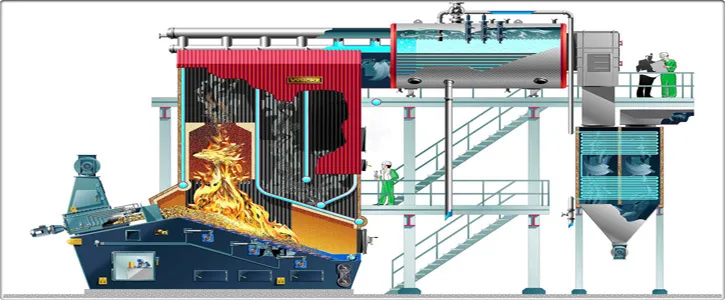
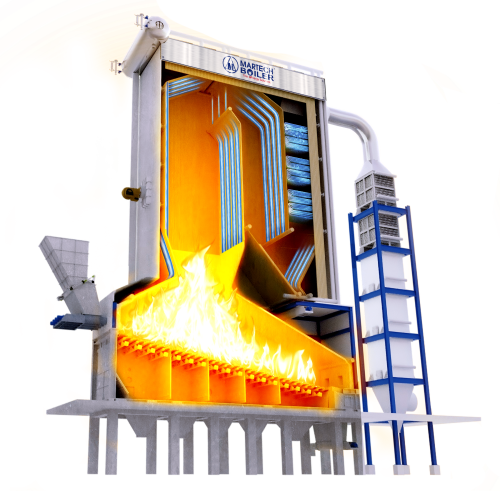
On a reciprocating grate, fuel is pushed forward through the furnace over hydraulically driven moving and fixed grate steps. The back-and-forth motion continuously turns the fuel bed, so even wet, coarse fuels pass through drying, gasification, combustion and ash-cooling zones and burn out completely.
Operating Principle
- Feeding: Fuel is delivered from the hopper to the grate head by hydraulic ram or screw feeder.
- Stepwise advance: Hydraulically driven moving steps stir and advance the fuel; stroke rate is adjusted to load.
- Zoned air: Primary air is supplied separately to 3–5 zones under the grate; secondary and tertiary air create turbulence and complete combustion in the furnace.
- Ash discharge: Ash at the grate end is removed automatically by wet or dry ash conveyor.
System Components
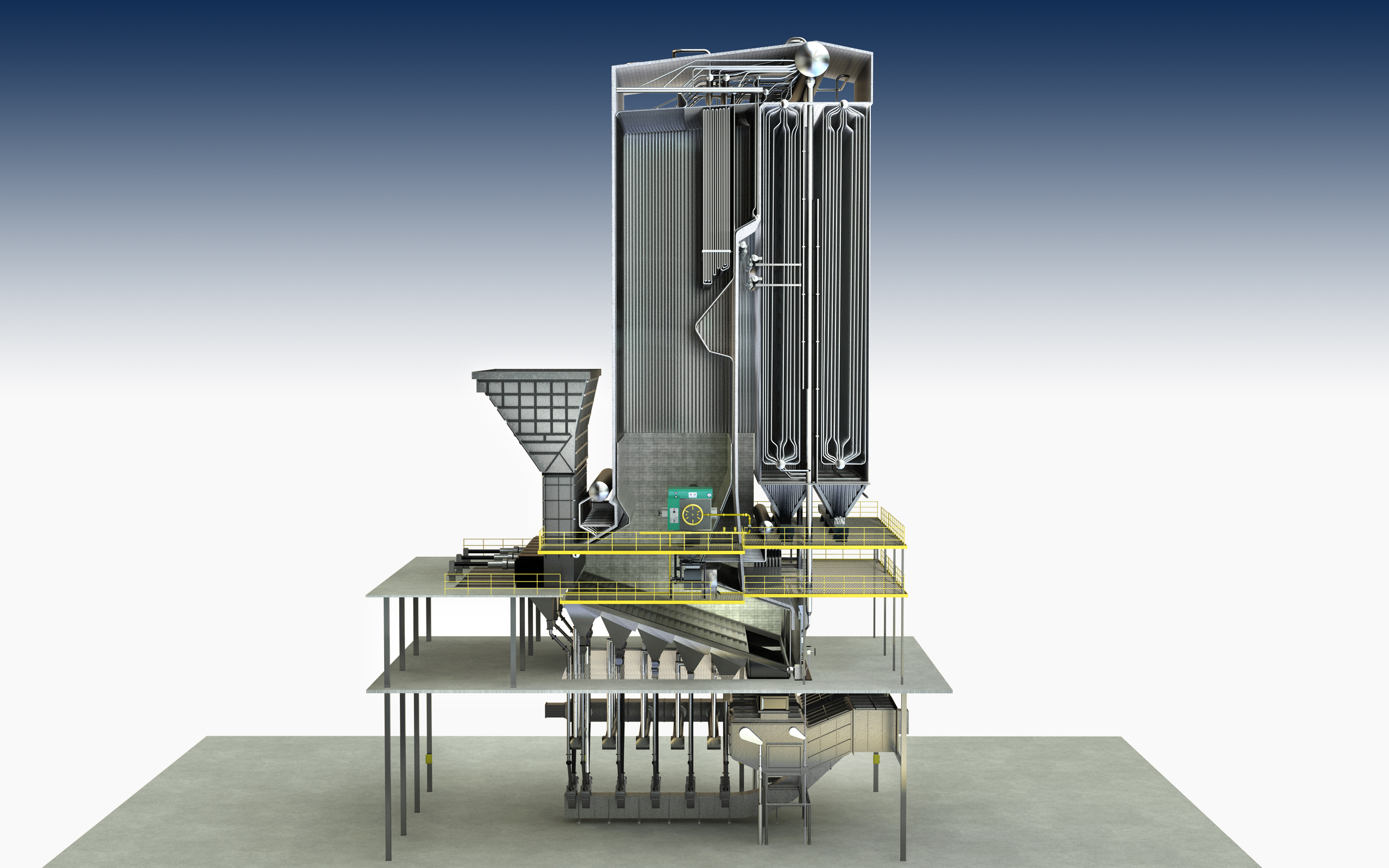
- Grate bars: Chrome-alloy castings resistant to high-temperature corrosion and wear; air-cooled or water-cooled.
- Hydraulic power unit: Independent stroke control per zone.
- Furnace: Refractory-lined, membrane-walled where required; long gas residence time (≥2 s at 850 °C for waste firing).
- Automation: PLC/SCADA control of fuel feed, grate stroke, fans, O₂ and CO trim; flue-gas recirculation option.
- Flue-gas cleaning: Multicyclone, bag filter; dry/semi-dry sorption and SNCR for waste firing.
Technical Advantages
- Fuel flexibility: Moisture up to 55%, particle size up to 300 mm and variable calorific value on the same grate.
- High combustion efficiency: Continuous stirring and staged air give up to 90% combustion efficiency and low unburned carbon in ash.
- Low emissions: Staged air and flue-gas recirculation for low NOx and CO.
- Durability: Water-cooled grate option reduces slagging and wear with low ash-melting fuels.
- Scalability: Modular grate lanes for capacity increases.
Typical Application Range
- Thermal capacity: 2 – 60 MW (single line)
- Fuel: wood and forest residues, chips, bark, olive pomace, agricultural residues, RDF/SRF, sewage sludge (co-firing), lignite
- Applications: biomass power plants, cogeneration, waste-to-energy, district heating, process steam for paper, food and textile
- Design codes: EN 12952, EN 303-5, CE; Industrial Emissions Directive (IED) requirements for waste firing
Assessment: Advantages and Points to Consider
- Advantage: Widest fuel tolerance; full compatibility with waste-to-energy projects; long grate life.
- Consider: The moving mechanism needs planned mechanical maintenance compared with a fixed grate; keeping fuel size and moisture within tolerance preserves efficiency.
The NEO MAKİNA Difference
Grate area, number of zones and air distribution are calculated from fuel analysis and ash properties. Furnace geometry, residence time and emission targets are engineered together. Installation, commissioning, operator training and spare grate-bar support are included.
Frequently Asked Questions
Which fuels call for a reciprocating grate?
Coarse, wet and heterogeneous fuels: wood, forest residues, RDF, pomace, sludge blends. For homogeneous, small-sized fuels a travelling grate may be more economical.
Air-cooled or water-cooled grate?
Air-cooled is sufficient for high-moisture fuels. Water-cooled is recommended for dry, high-calorific or low ash-melting fuels (RDF, some agricultural residues).
Does it comply with waste-incineration regulations?
Yes. It is designed for at least 2 seconds residence at 850 °C, continuous emission monitoring and flue-gas treatment in line with IED/national regulations.
To select the right reciprocating grate system for your fuel and request a quotation, contact us.