
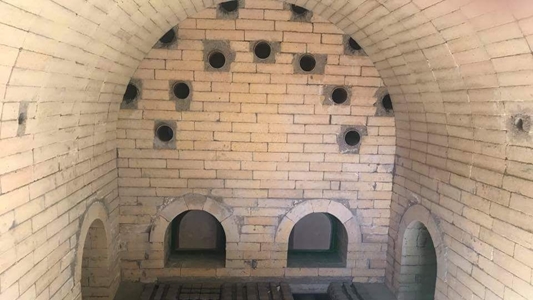
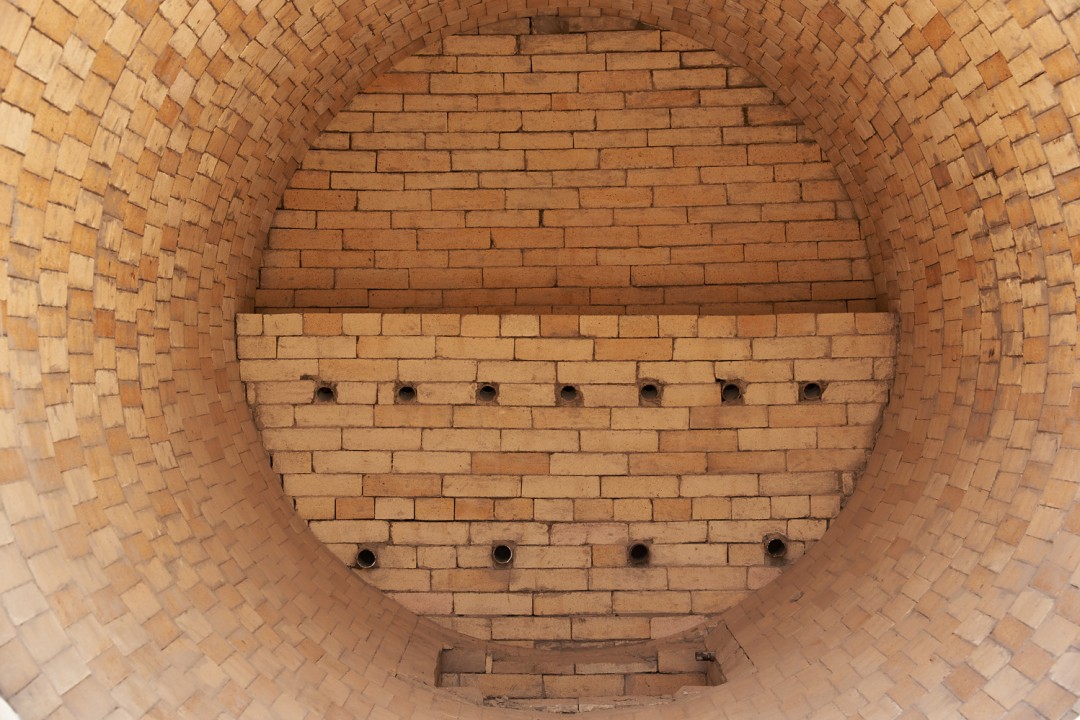
NEO MAKİNA ve MÜHENDİSLİK A.Ş. provides industrial refractory technologies for the high-temperature zones of boilers, furnaces, dryers, cyclones, stacks and combustion systems: refractory material selection, lining design, brick and monolithic (castable) installation, dry-out and heat-up curve management and periodic maintenance. The right refractory reduces heat loss, extends equipment life and prevents unplanned downtime.
What Is a Refractory and Why Is It Critical?
Refractories are ceramic-based materials that retain shape and strength above 1,000 °C. In furnaces, furnace walls, cyclones and ducts they protect the steel structure from heat, chemical attack and abrasion. Wrong material selection or installation leads to cracking, spalling, slag penetration and early relining cost.
Refractory Material Classification
By Chemical Character
- Acidic: Silica and fireclay (alumino-silicate) group; boiler furnaces, stacks, coke ovens.
- Neutral: High-alumina (50–99% Al₂O₃), chrome-corundum, silicon carbide (SiC); fluidized bed boilers, cyclones, waste incinerators.
- Basic: Magnesite, magnesia-chrome, dolomite; cement rotary kilns, steel ladles, lime kilns.
By Form and Installation Method
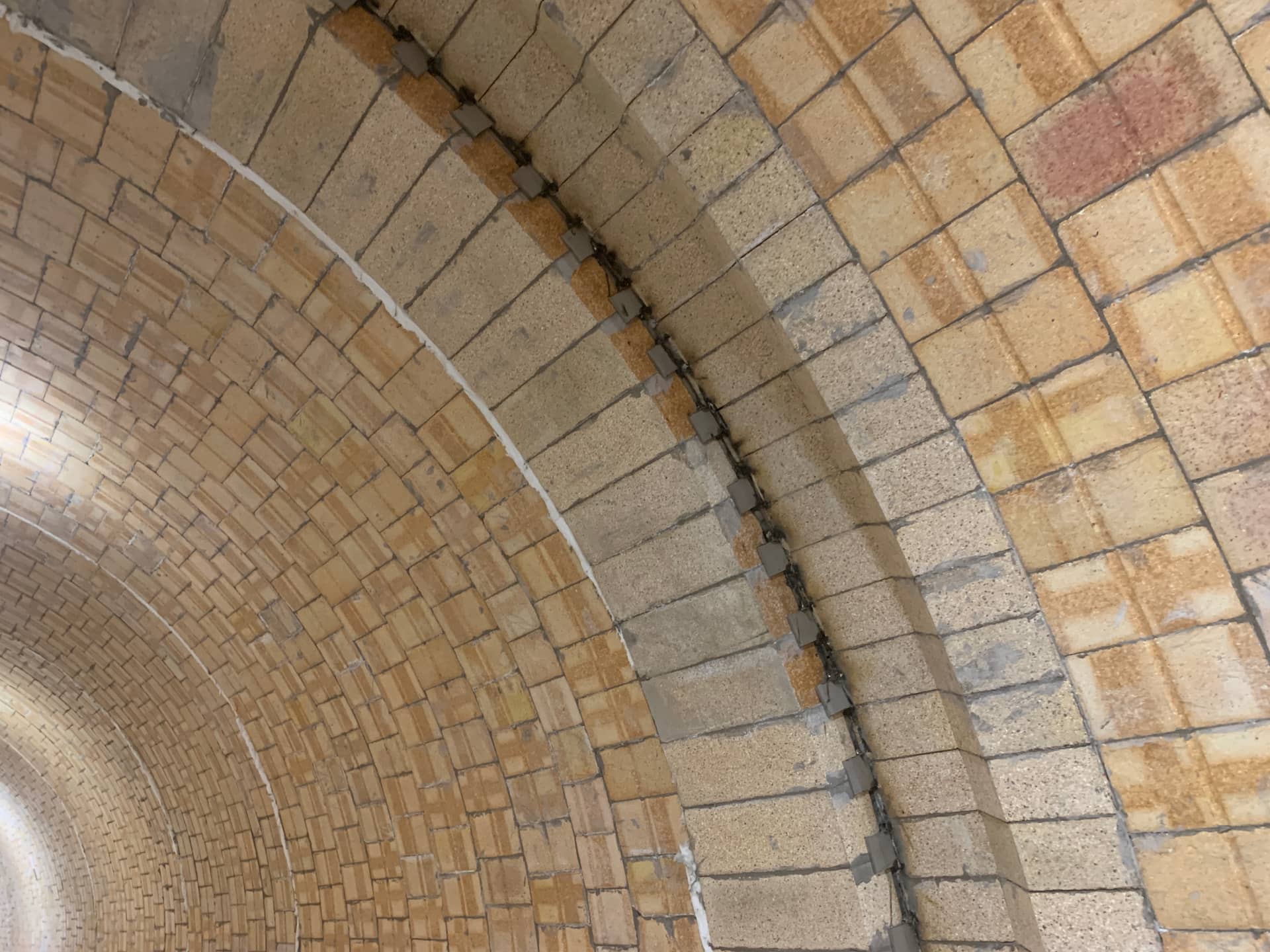
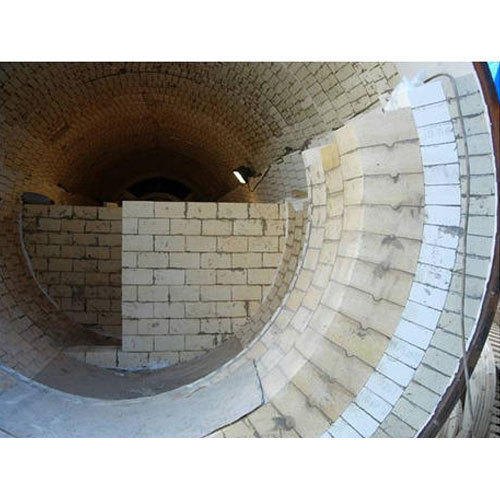
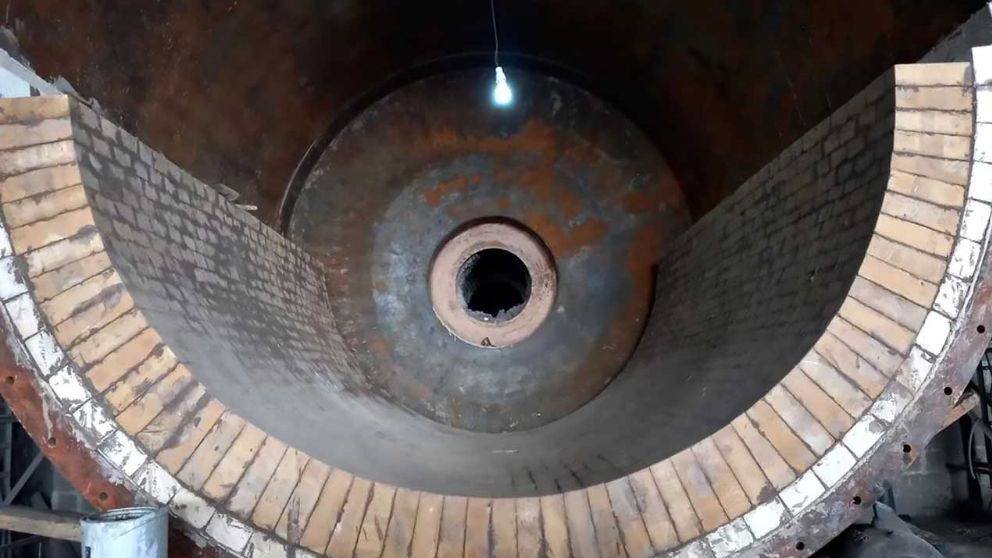
- Shaped (bricks and blocks): Pressed products with high mechanical strength and low porosity; furnace walls, arches and roofs, special-shape blocks.
- Monolithic (castable): Refractory castables (conventional, low-cement LCC, ultra-low-cement ULCC), gunning/shotcrete mixes, plastic and ramming masses; jointless installation and speed on complex geometries.
- Insulating refractories: Lightweight insulating brick, calcium silicate board, ceramic fibre blanket and modules; back-up lining and low heat loss.
- Anchor systems: Stainless (AISI 304/310) V and Y anchors, ceramic anchors; securing castable linings to the steel shell.
Technical Parameters and Selection Criteria
- Service temperature and refractoriness: No phase change or softening under load (RUL) at continuous operating temperature; 1,300–1,800 °C classes.
- Thermal conductivity: Working and insulating layers sized together to keep shell temperature below 60–80 °C; lower heat loss and fuel consumption.
- Thermal-shock resistance: Tolerance of sudden ΔT in equipment with frequent start-stop; SiC-reinforced and low-expansion products.
- Chemical and abrasion resistance: Resistance to ash, slag, alkali and acidic gases; wear resistance in high-velocity particle flow (cyclones, fluidized beds).
- Mechanical strength: Cold crushing (CCS) and hot modulus of rupture (HMOR); suitability for vibration and impact loads.
Scope of Service
- Lining design: Layer thicknesses, expansion joints and anchor layout from heat-transfer calculation; CAD drawings.
- Material supply: Certified supply of bricks, castables, fibre and anchor sets for the application.
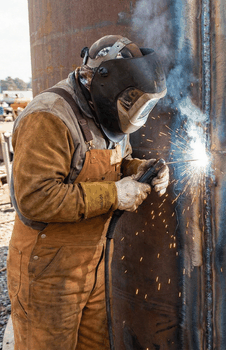
- Installation: Bricklaying, formwork casting, gunning and ramming by experienced refractory crews; quality control (mixing water, vibration, sample testing).
- Dry-out and heat-up: Controlled drying curve on castable linings to prevent explosive spalling and cracking.
- Maintenance and overhaul: Damage assessment at planned outages (thermal imaging, thickness measurement), partial repair and complete relining.
Applications
- Solid-fuel steam and thermal oil boilers, fluidized bed boilers, grate-fired systems
- Hot cyclones, ducts and stacks, waste and sludge incinerators
- Rotary dryers and lime/cement kilns, annealing and heat-treatment furnaces
- Petrochemical furnaces, reformers, boiler-house combustion chambers
- Standards: EN ISO 1927 (monolithic refractories), EN 993 series test methods, ASTM C27/C401 classification
Why NEO MAKİNA?
As a boiler and combustion-system manufacturer we treat the refractory together with the equipment's thermal and mechanical design: material and lining structure are selected from fuel analysis, ash chemistry and operating regime, and installation and dry-out are carried out by our own crews. Refractory overhauls and efficiency upgrades at existing plants are scheduled around the outage plan.
Frequently Asked Questions
Brick or castable?
Brick for flat walls needing long life and high mechanical load; low-cement castable for complex geometry, fast installation and jointless structure. Most equipment uses both.
How long does a refractory last?
With correct selection and installation, 5–10 years in boiler furnaces and 2–4 years in cyclones and high-wear zones; periodic inspection and partial repair extend life.
Why is dry-out necessary?
Free and chemically bound water in castable refractory causes explosive spalling under uncontrolled heating; a staged 24–72 hour heat-up curve removes this risk.
For refractory selection, lining design and an installation quotation for your equipment, contact us.