
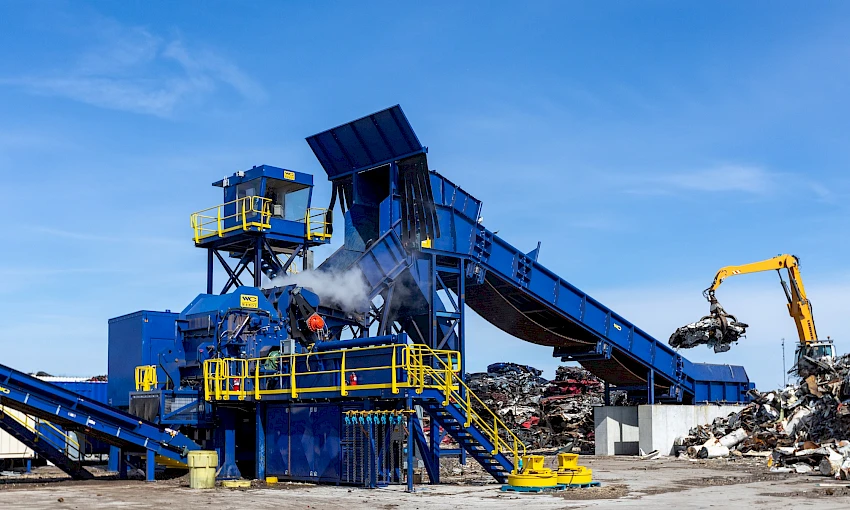
NEO MAKİNA ve MÜHENDİSLİK A.Ş. builds turnkey recycling and waste management facilities for municipalities, industrial zones and industrial companies. Municipal waste sorting and RDF preparation, plastic recycling, scrap-metal processing, compost and biogas from organic waste, waste-to-energy and waste-heat recovery plants reduce waste going to landfill and convert it into valuable raw materials and energy through integrated design of mechanical, thermal and biological processes. Our reference work includes an 8 t/day municipal waste recycling plant and a 950,000 t/year marble-waste feasibility study in Silifke.
Facility Types
1. Municipal Waste Sorting and RDF Plants (MBT)
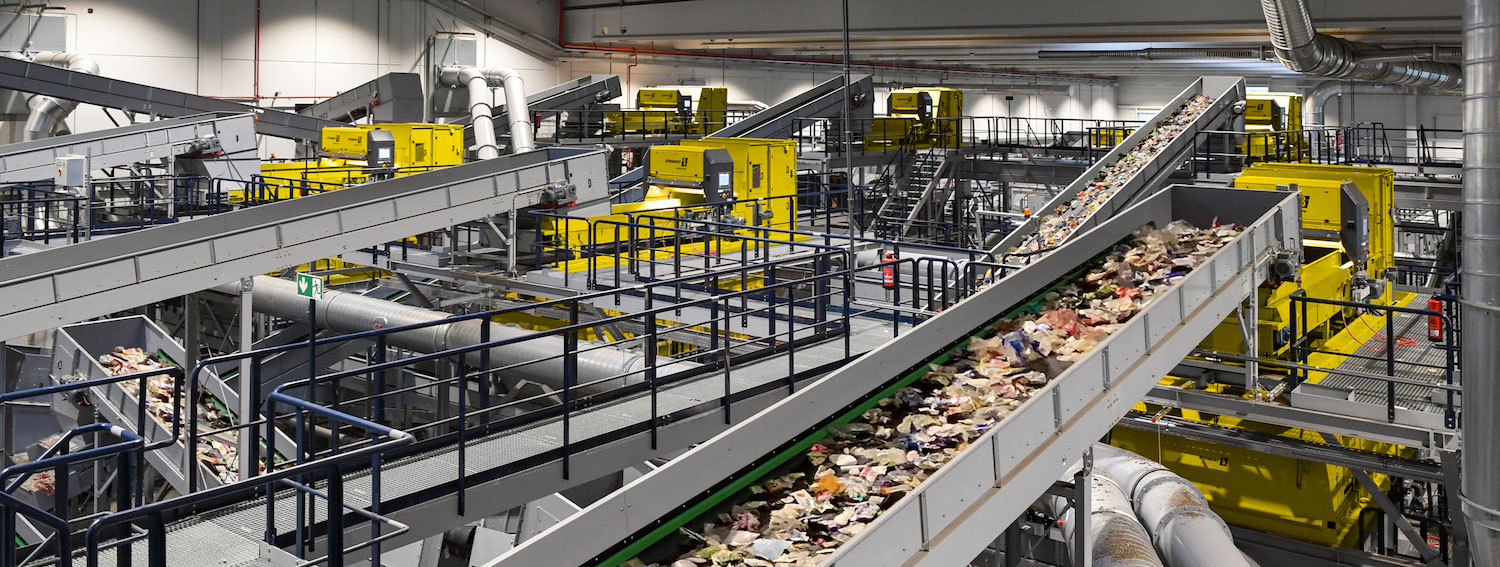
- Reception and pre-shredding: Bag opener, slow-speed shredder, weighbridge and reception hopper.
- Mechanical sorting: Trommel and disc screens, ballistic separator, magnetic and eddy-current separators, air classifier, NIR optical sorters; manual sorting cabins.
- Products: Recyclable packaging (PET, HDPE, paper-cardboard, metal), high-calorific RDF/SRF (fuel), organic fraction (biological treatment), inert residue.
- Capacity: 50 – 1,000 t/day; baling and RDF pelleting units.
2. Plastic Recycling Plants
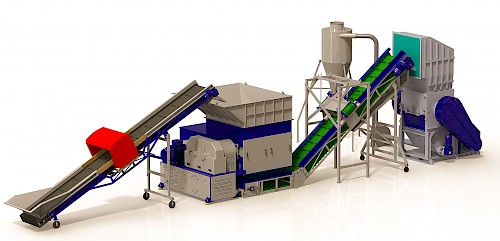
- Pre-treatment: Bale opening, pre-screening, metal separation, shredding (wet/dry granulators).
- Washing and separation: Friction washers, hot washing (caustic for PET), sink-float density tanks, hydrocyclone, label remover, NIR colour and polymer sorting.
- Drying and pelletising: Mechanical centrifuge and thermal dryer; single/twin-screw extruder, melt filtration, degassing, underwater or strand pelletiser.
- Capacity: 500 – 5,000 kg/h; PET flake, rHDPE/rPP pellets; closed-loop water treatment.
3. Scrap-Metal Processing Plants
- Scrap balers and shears, hammer shredders, magnetic drums, eddy-current and sensor-based sorting; non-ferrous (aluminium, copper) upgrading lines.
- Melting and refining units (induction and rotary furnaces), slag processing, ingot casting; together with flue-gas treatment.
4. Organic Waste: Compost and Biogas
- Composting: Open windrow turners or enclosed tunnel/reactor composting; aeration, moisture control and screening; maturation.
- Biogas: Anaerobic digesters (CSTR or dry fermentation), pre-treatment (shredding, 70 °C hygienisation), biogas cleaning (H₂S removal), CHP engine or biomethane; digestate dewatering.
- Feedstock: Food waste, market and park waste, manure, food-industry by-products, sewage sludge.
5. Waste-to-Energy and Waste-Heat Recovery
- Reciprocating-grate and fluidized-bed incineration plants for RDF and sewage sludge; electricity via waste-heat boiler, steam turbine or ORC.
- Flue-gas treatment: bag filter/ESP, dry sorption, activated carbon, SNCR/SCR; see Flue Gas Filtration Systems.
- Industrial waste heat: energy recovery from existing stacks with economisers, recuperators and ORC.
6. Industrial and Mining Waste
- Calcite/filler production from marble and quarry waste, construction-demolition waste recovery (crushing-screening), ash and slag utilisation, special process projects such as boron tailings ZLD and lithium recovery.
Engineering Approach
- Waste characterisation: Composition analysis, moisture and calorific value, seasonal variation; mass balance and product-yield calculation.
- Technology selection: Combination of mechanical-biological-thermal stages according to target product (recyclables, RDF, compost, energy) and market conditions; CAPEX/OPEX and payback analysis.
- Environment and regulation: National waste regulations, zero-waste programmes, EU waste framework directive and BAT references; technical support for EIA and permitting; odour, dust and leachate control.
- Automation: Line sequencing and load control, weighbridge-traceability software, energy and production reporting, SCADA.
Typical Application Range
- Capacity: 20 – 1,000 t/day (sorting and MBT); 500 – 5,000 kg/h (plastics); 1 – 50 t/day (biogas feedstock)
- Clients: municipalities and unions, industrial-zone authorities, licensed recyclers, food and agricultural businesses, mines and quarries
- Standards: CE Machinery Directive, ATEX (dust and biogas), EN 15359 (SRF classification), waste-incineration regulations, EU IED
Why NEO MAKİNA?
Single responsibility from feasibility to operation: waste analysis, process design, equipment manufacture and supply, steel structure and buildings, erection, automation, commissioning and operator training. Because we integrate our own combustion, drying, boiler and flue-gas treatment equipment, mechanical and thermal stages work in harmony in waste-to-energy projects. We have implementation experience in Türkiye and abroad (Africa, Central Asia).
Frequently Asked Questions
Which facility type suits me?
Waste composition decides: sorting + recycling for high packaging content, biogas/compost for high organic content, RDF + waste-to-energy under landfill restrictions; most projects combine stages.
Is a recycling plant profitable?
With recovered-material sales, gate fees and energy revenue, typical payback is 4–8 years; feasibility is calculated with local market prices and incentives.
Can I expand my existing plant?
Yes. Adding optical sorters, an RDF line, a biogas unit or waste-heat recovery raises the efficiency and product value of existing plants.
For a facility concept, feasibility and quotation based on your waste profile, contact us.