
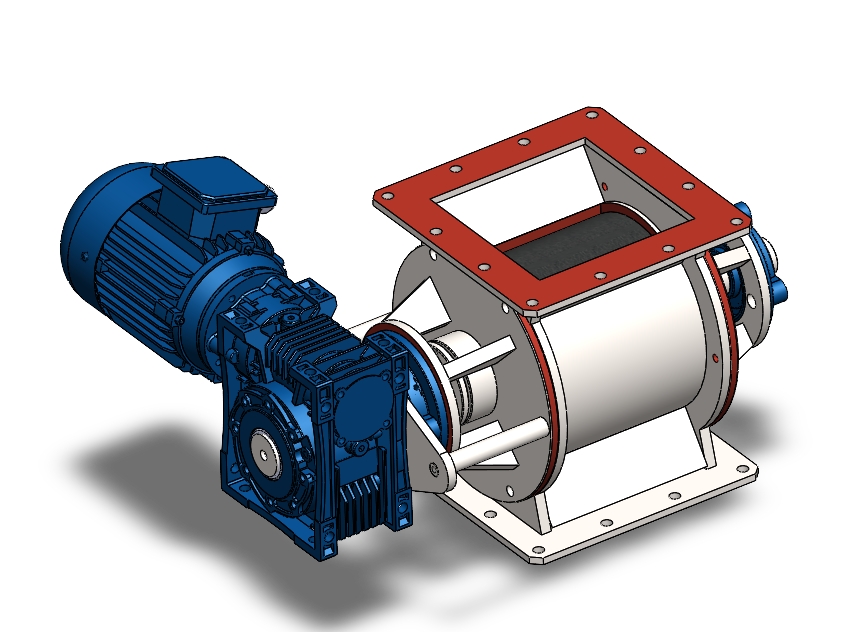
NEO MAKİNA ve MÜHENDİSLİK A.Ş. manufactures rotary airlock valves and diverter valves for controlled discharge and routing of powders and granules in silos, filters, cyclones and pneumatic conveying lines. Pocketed-rotor airlocks that limit air leakage across a pressure differential and two/three-way diverters are the core elements of dosing and flow control in cement, mining, food, feed, chemical and power plants.
What Is a Rotary Airlock Valve?
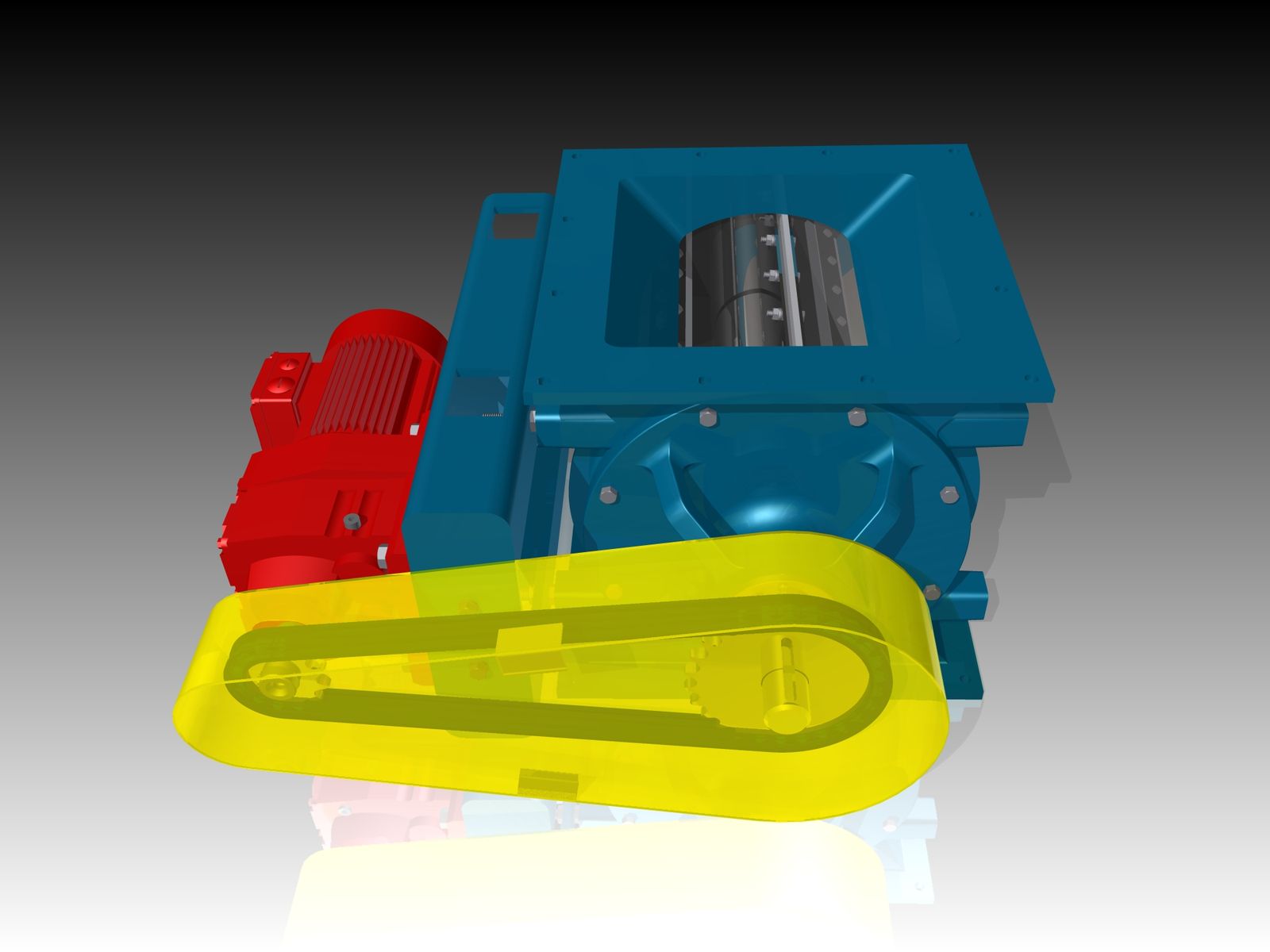
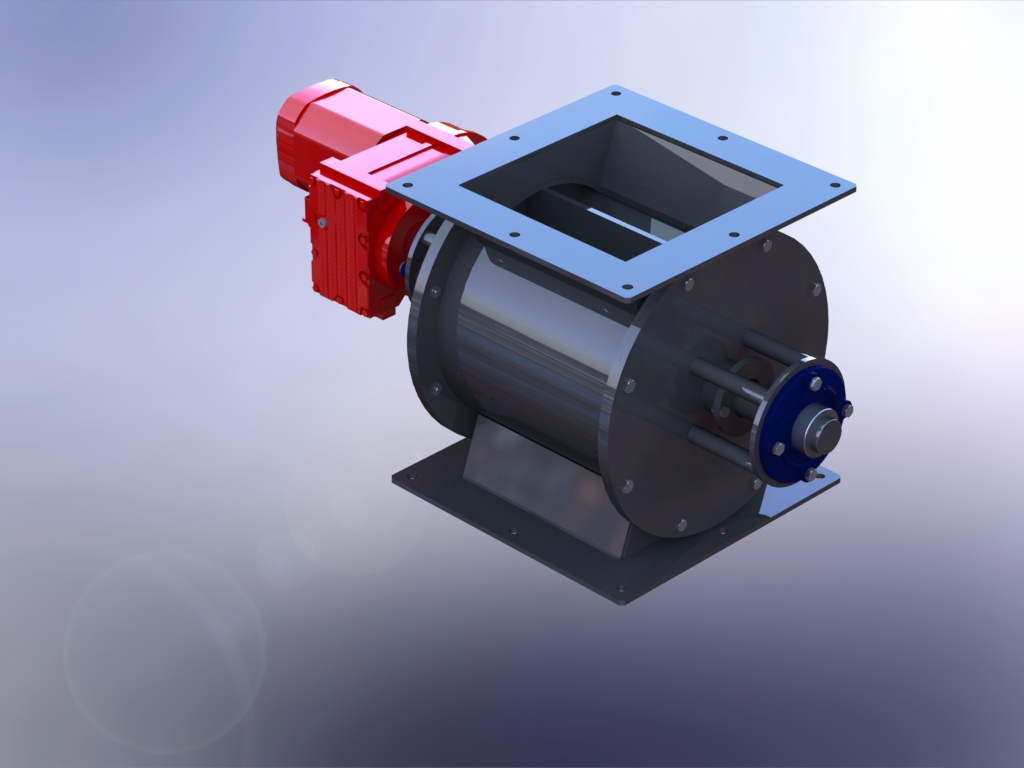
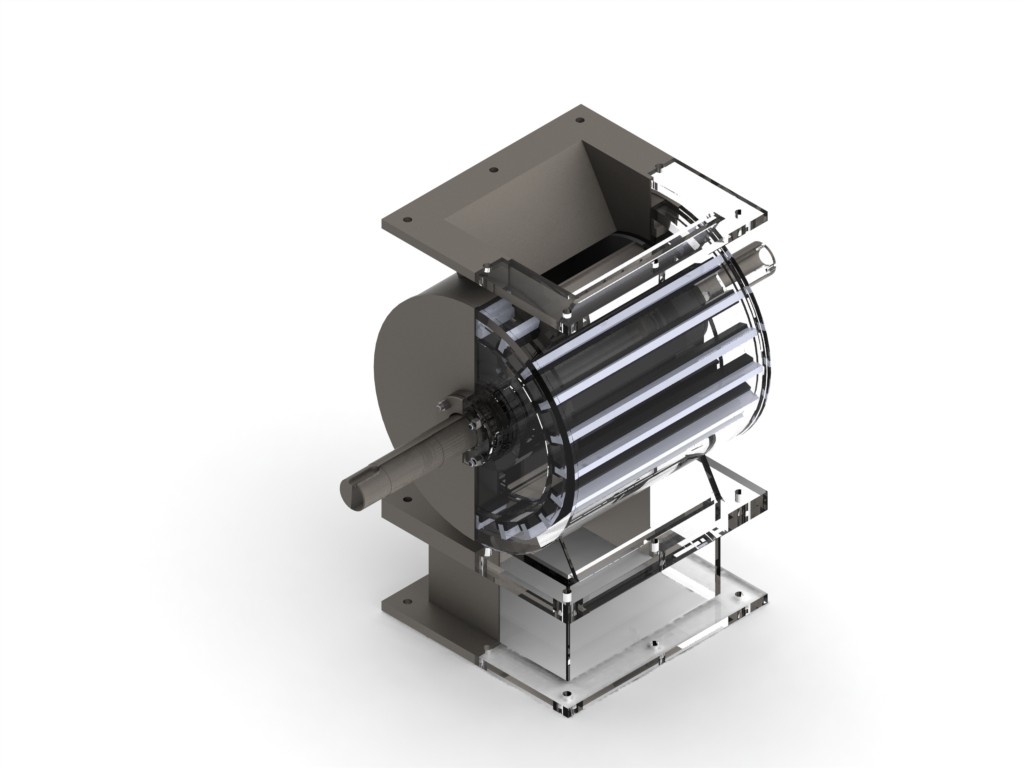
A rotary valve uses a pocketed rotor turning inside a cylindrical housing to take material from the top and discharge it below in a controlled way while maintaining the pressure difference between the two environments. It serves as a volumetric dosing element under filters, at pneumatic-line feed points and at silo outlets. Rotor-to-housing clearance is machined to a standard 0.1–0.2 mm tolerance; tighter tolerances are provided for special duties.
Product Range
Rotary Airlock Valves
- Standard type: Dust discharge under filters and cyclones; up to 0.5 bar pressure difference.
- Blow-through type: Direct feeding into pressure conveying lines; up to 1.5 bar, air-tightness-optimised rotor.
- High-temperature type: Expansion allowance and heat-resistant seals for ash, clinker and hot dust up to 400 °C.
- Wear-resistant type: Hardox, hardened or chrome-plated rotor and housing; sand, cement, ore dust.
- Hygienic type: AISI 304/316L, quick-clean removable rotor for food and pharma.
- ATEX type: Flameproof design (EN 15089 compliant), certified as explosion isolation element.
Diverter Valves
- Flap diverter: Two-way, for gravity-flowing material; pneumatic or electric actuator.
- Tube diverter: Two- or multi-way sealed switching on pneumatic conveying lines.
- Rotary drum diverter: Multi-outlet silo filling systems.
- Slide-gate and pant-leg type: Flow routing for coarse and lumpy material.
Technical Details
- Sizes: DN 150 – DN 800 rotary valves; 1 – 150 m³/h volumetric capacity
- Materials: Cast iron, carbon steel, AISI 304/316L stainless; special alloys
- Rotor designs: Open-end straight blade, closed-end, bevelled blade, adjustable tips, rubber/PU tips (sticky material)
- Sealing: Gland packing, labyrinth or air-purged shaft seals; PTFE and high-temperature graphite options
- Connections: Square or round flanges (DIN/ANSI), welded special flanges
- Drive: Gear motor (direct or chain), variable-speed dosing; hydraulic drive option
- Control: Rotation sensor, blockage detection, actuator position feedback
Applications
- Dust discharge under bag filters and cyclones (Dust Collection and Filtration)
- Feeding pneumatic conveying lines (Pneumatic Conveying Systems)
- Volumetric dosing at silo and hopper outlets; mill and dryer feeding
- Boiler ash discharge and coal/biomass feeding; cement, flour, feed, chemical and plastic granule plants
- Standards: CE Machinery Directive, ATEX 2014/34/EU, EN 15089 (explosion isolation systems)
Why NEO MAKİNA?
- Correct selection: Rotor type, speed and sealing chosen for material (particle size, abrasiveness, stickiness, temperature), pressure difference and capacity.
- Precision manufacturing: CNC-machined housing and rotor, low air leakage, long life.
- Line integration: Engineering and installation together with filters, cyclones, silos and conveying systems.
- Service: Spare rotor and seal kits, maintenance and overhaul.
Frequently Asked Questions
How much air leaks through a rotary valve?
Leakage depends on pressure difference, clearance and rotor volume. For a DN 300 standard valve at 0.5 bar, typical leakage is 10–20 m³/h; in blow-through types it is reduced with a vent line.
What speed should it run at?
10–30 rpm is recommended for fill efficiency; higher speed lowers fill and increases wear. For dosing duties speed is set by variable-frequency drive.
How is blockage prevented with sticky material?
Rubber/PU-tipped rotors, open-end pockets, housing heating or air-purge design reduce sticking and bridging.
For rotary valve and diverter selection and a quotation for your application, contact us.