
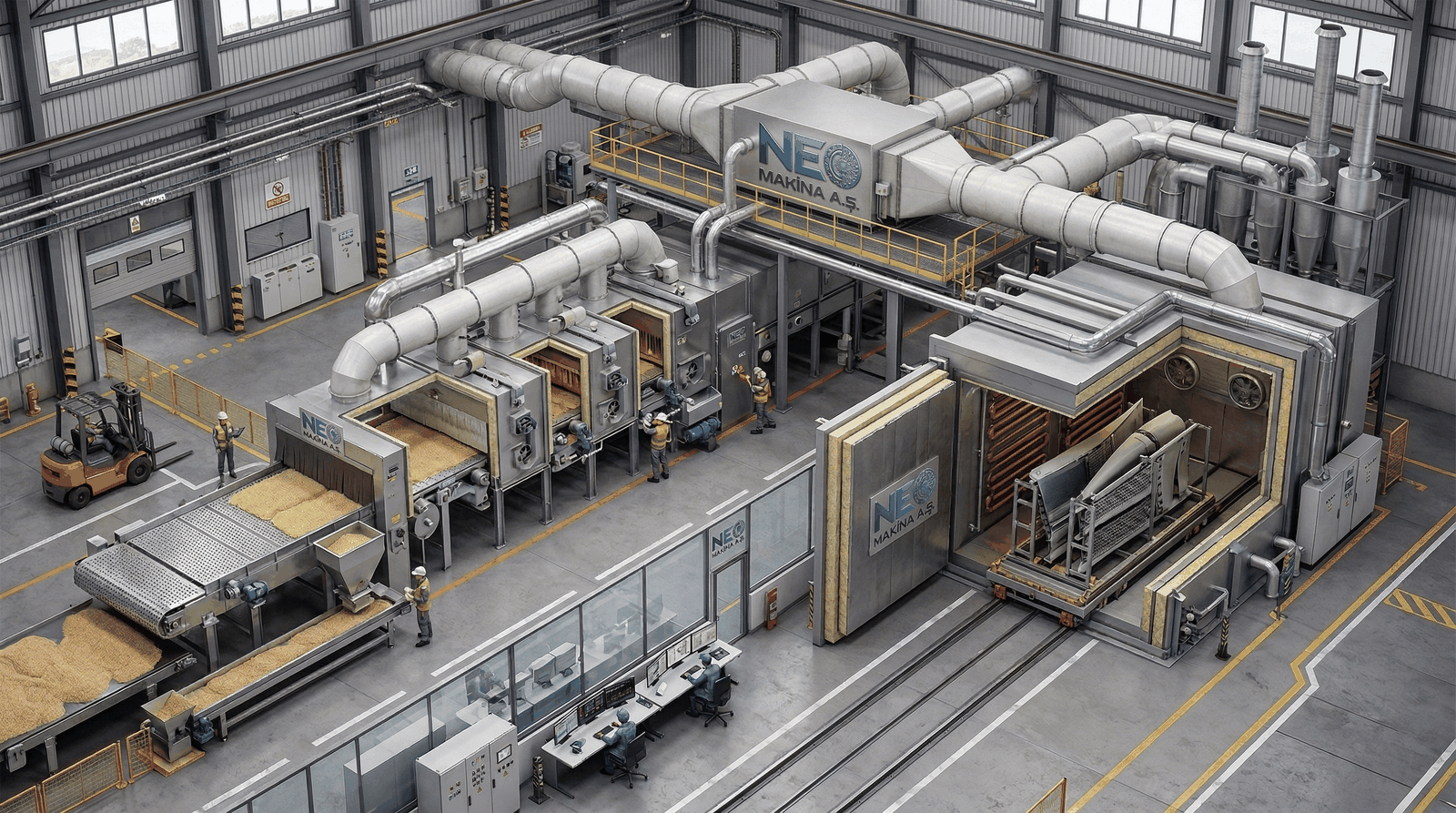
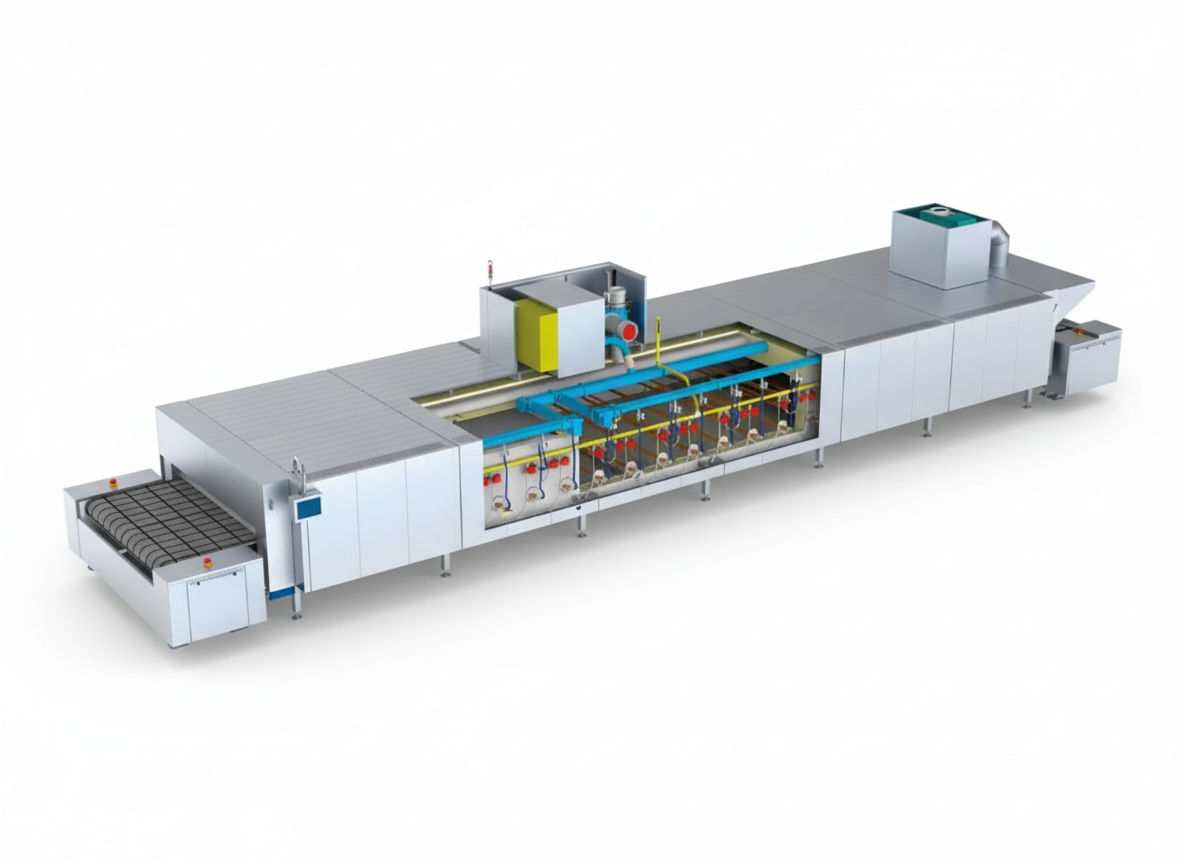
NEO MAKİNA ve MÜHENDİSLİK A.Ş. designs and manufactures fruit and vegetable conveyor (belt) drying systems for continuous, hygienic drying of tomatoes, peppers, apricots, apples, figs, grapes, onions and herbs. Multi-tier or single-tier perforated belts, zoned temperature-humidity control and heat recovery preserve colour, aroma and nutritional value while reducing energy consumption.
How Does a Conveyor Dryer Work?
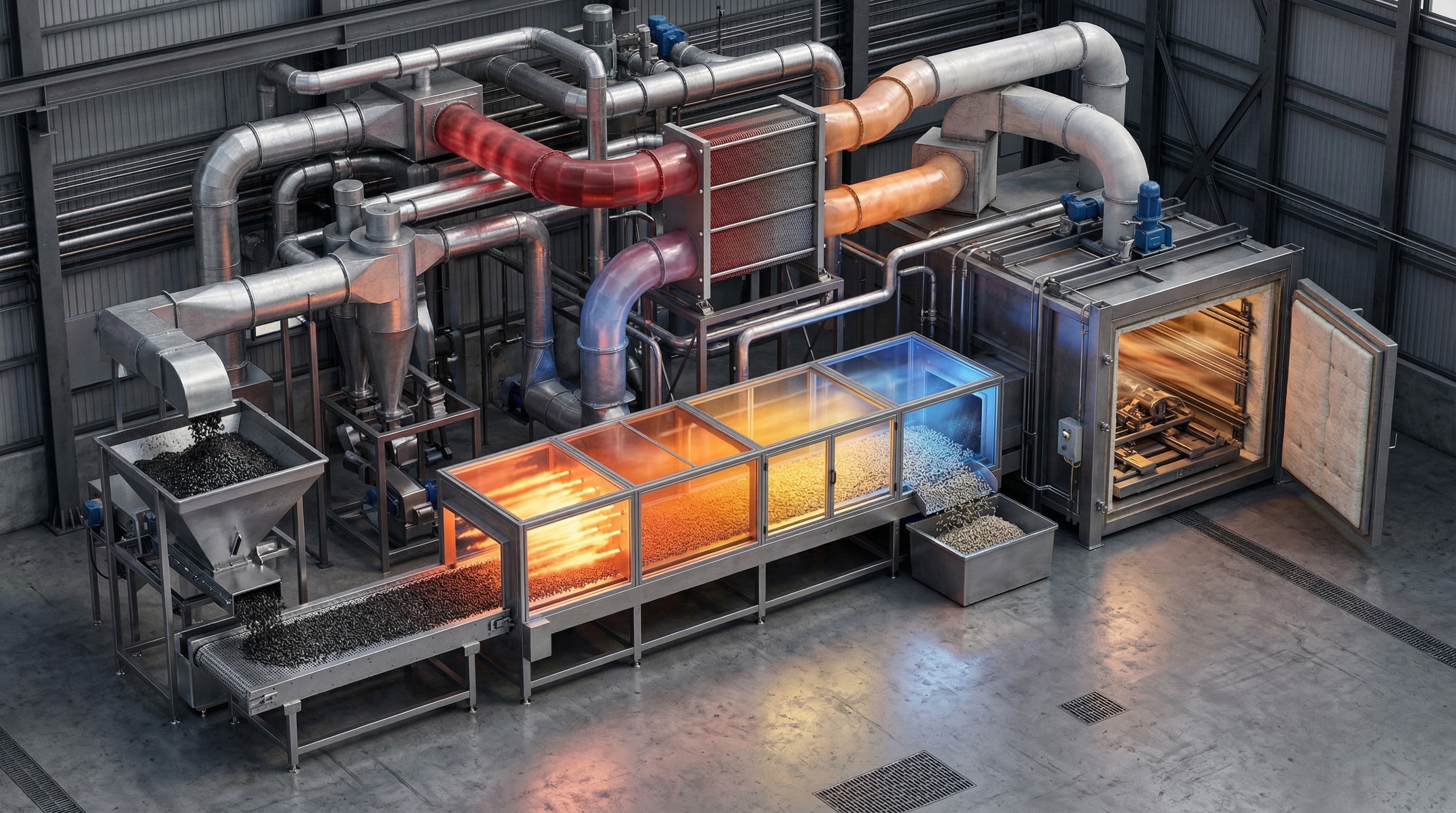
Sliced or whole product is spread in a uniform layer on a perforated stainless belt and travels through the tunnel. Heated air passes through (through-air) or over the product layer to remove moisture. The tunnel is divided into independently controlled zones: preheating, constant-rate drying, falling-rate drying and cooling. Belt speed and zone temperatures adjust automatically to the product recipe.
Airflow and Thermal Design
- Through-air flow: High mass transfer as air filters through the product bed on the perforated belt; the most efficient regime for sliced fruit and vegetables.
- Impingement nozzles: Fast initial drying of thin products by breaking the boundary layer at the surface.
- Parallel / counter-flow: Product-air direction selected for final-moisture precision on products needing long residence time.
- Heat recovery: Energy in the humid exhaust is transferred to fresh air by plate/tube recuperator; fuel consumption falls 25–45%.
- Heat source: Steam, hot water, thermal oil, direct gas/LPG firing or biomass hot-air generator; heat-pump assisted low-temperature option.
System Components
- Feeding and spreading: Vibratory spreader or oscillating belt for uniform layer thickness.
- Belt: AISI 304 perforated plate, woven wire or food-grade modular plastic belt; single, double or multi-tier (3–5 tiers) design.
- Heating and air units: Heat exchanger and circulation fan per zone; variable-speed exhaust fans.
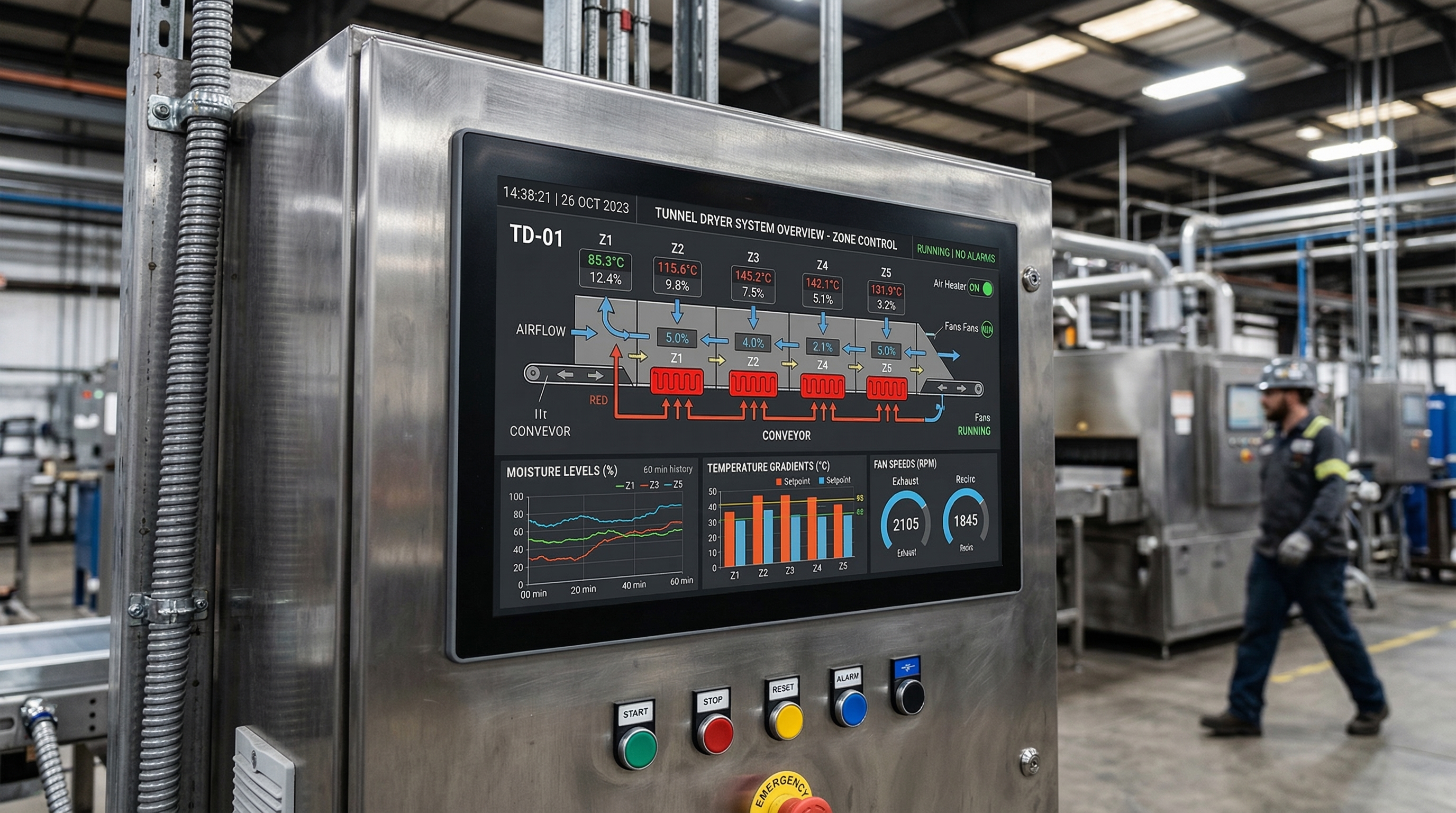
- Control: PLC/SCADA zone temperature and humidity recipes, belt speed, energy monitoring; product recipe selection on HMI.
- Hygiene: Washable housing, hinged doors, CIP belt-washing unit; stainless food-contact surfaces.
Typical Application Range
- Capacity: 200 kg/h – 5 t/h fresh product intake per line
- Drying temperature: 40 – 120 °C (by product)
- Final moisture: 5 – 18% (by product standard)
- Belt width: 1.0 – 3.0 m; tunnel length 10 – 40 m
- Products: tomato, pepper, apricot, fig, grape, apple, onion, garlic, parsley, mint, thyme, hazelnut, date
- Standards: CE Machinery Directive, EN 746-2 (heating), food-hygiene principles, ISO 22000/HACCP compliant layout
Why NEO MAKİNA?
- Product-specific design: Each product's drying kinetics (moisture content, slice thickness, sensitivity) is established by laboratory trial; tunnel length and zone count are calculated accordingly.
- Energy efficiency: Recuperation, zone recirculation and variable-speed fans for low operating cost.
- Quality: Low temperature, controlled humidity and uniform air distribution preserve colour and aroma; case hardening is prevented.
- Integrated line: Washing, slicing, blanching/sulphuring, drying, screening and packaging from a single source; combined solution with Fruit and Vegetable Processing and Washing Plants.
Frequently Asked Questions
Conveyor dryer or cabinet dryer?
Above 2 tonnes of fresh product per day and in continuous production, a conveyor dryer wins on labour and energy; for small capacity and wide product variety, cabinet-type static drying is economical.
How is tomato drying capacity calculated?
Drying tomatoes from 94% to 12% moisture yields about 70 kg dried product per tonne of fresh; the dryer is sized by the water to be evaporated (about 930 kg per tonne).
Is heat-pump drying possible?
Yes. The 40–70 °C heat-pump version dries sensitive products at low energy cost; a hybrid (heat pump + steam) option is available.
For a drying trial, capacity calculation and quotation for your product, contact us.