
NEO MAKİNA ve MÜHENDİSLİK A.Ş. designs and installs pneumatic conveying and flow control systems for air transport of powders and granules in closed pipelines. Pressure (dilute and dense phase) and vacuum systems, with blower, pipeline, cyclone-filter separator, rotary valves and diverters, provide dust-free, hygienic, low-maintenance material transfer. Used for silo filling, process feeding and packing lines handling flour, sugar, feed, cement, ash, plastic granules, chemicals and mineral powders.
How Does Pneumatic Conveying Work?
A pressure difference generated by a blower or compressor carries the material with the air stream along the pipeline. At the end of the line a cyclone and filter separate material from air; a rotary valve (airlock) admits or discharges material without upsetting the pressure balance. The system is fully enclosed; there is no dust emission or product loss.
System Types
Dilute-Phase Pressure Conveying
- Low pressure (0.3–1 bar), high air velocity (18–30 m/s); roots blower.
- Capacity 1 – 30 t/h, distance up to 300 m; non-abrasive, low-fragility materials (flour, feed, powdered chemicals).
Dense-Phase Pressure Conveying
- High pressure (1–6 bar), low velocity (3–10 m/s); plug flow from a pressure vessel (sender).
- Capacity 5 – 100 t/h, distance up to 1,000 m; low wear and breakage for abrasive (cement, ash, sand) and fragile (granules, coffee, pellets) materials.
Vacuum Conveying
- Negative pressure (−0.3 to −0.6 bar); multi-point to single-point collection, bag-dump stations, big-bag feeding.
- Capacity 0.5 – 15 t/h; leaks are inward, so hygienic and dust-free; ideal for food and pharma.
System Components
- Air source: Roots blower, screw compressor or vacuum pump; filter, silencer and safety valve.
- Feeding unit: Rotary valve, pressure vessel (sender), venturi feeder or screw feeder.
- Pipeline: Steel, stainless or aluminium pipe; long-radius bends, ceramic- or cast-lined bends against wear; booster nozzles along the line.
- Separation: Silo-top jet-pulse filter or cyclone; 99.9% separation, clean air discharge.
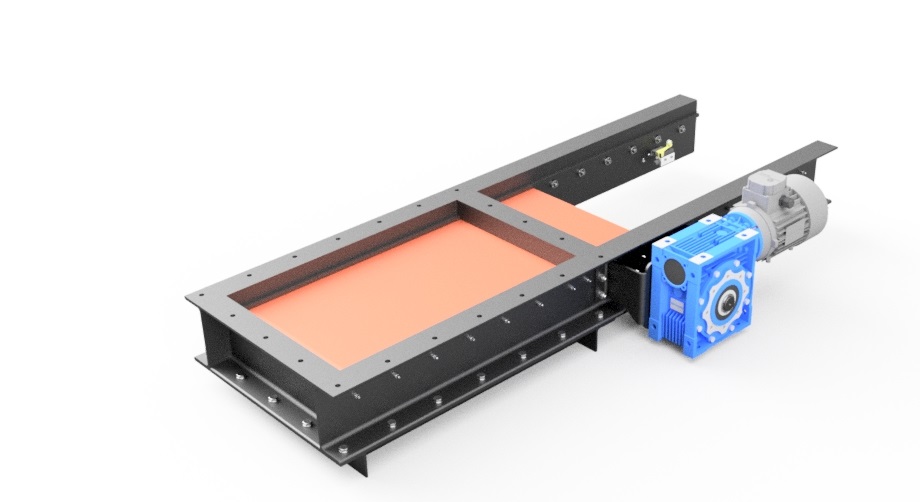
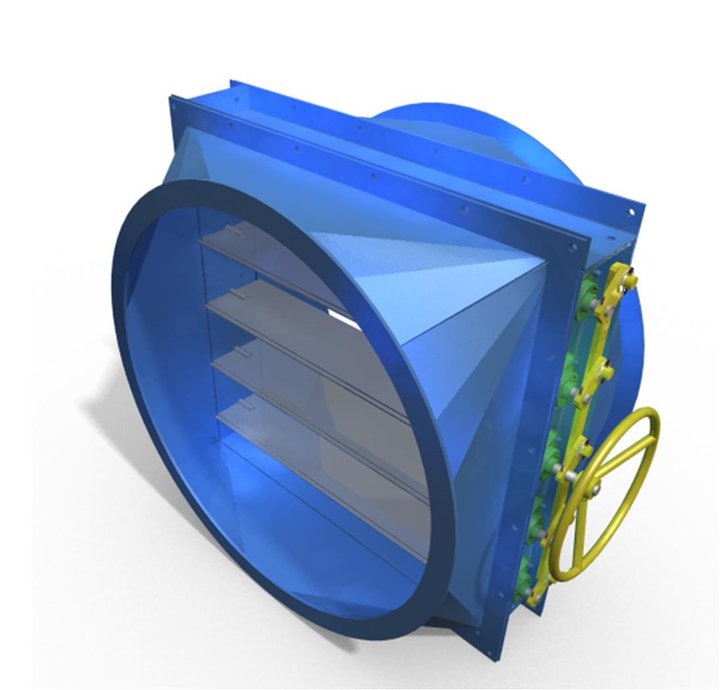
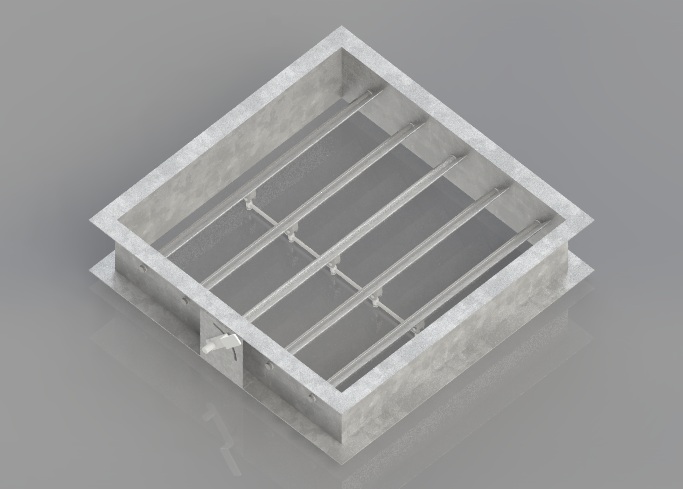
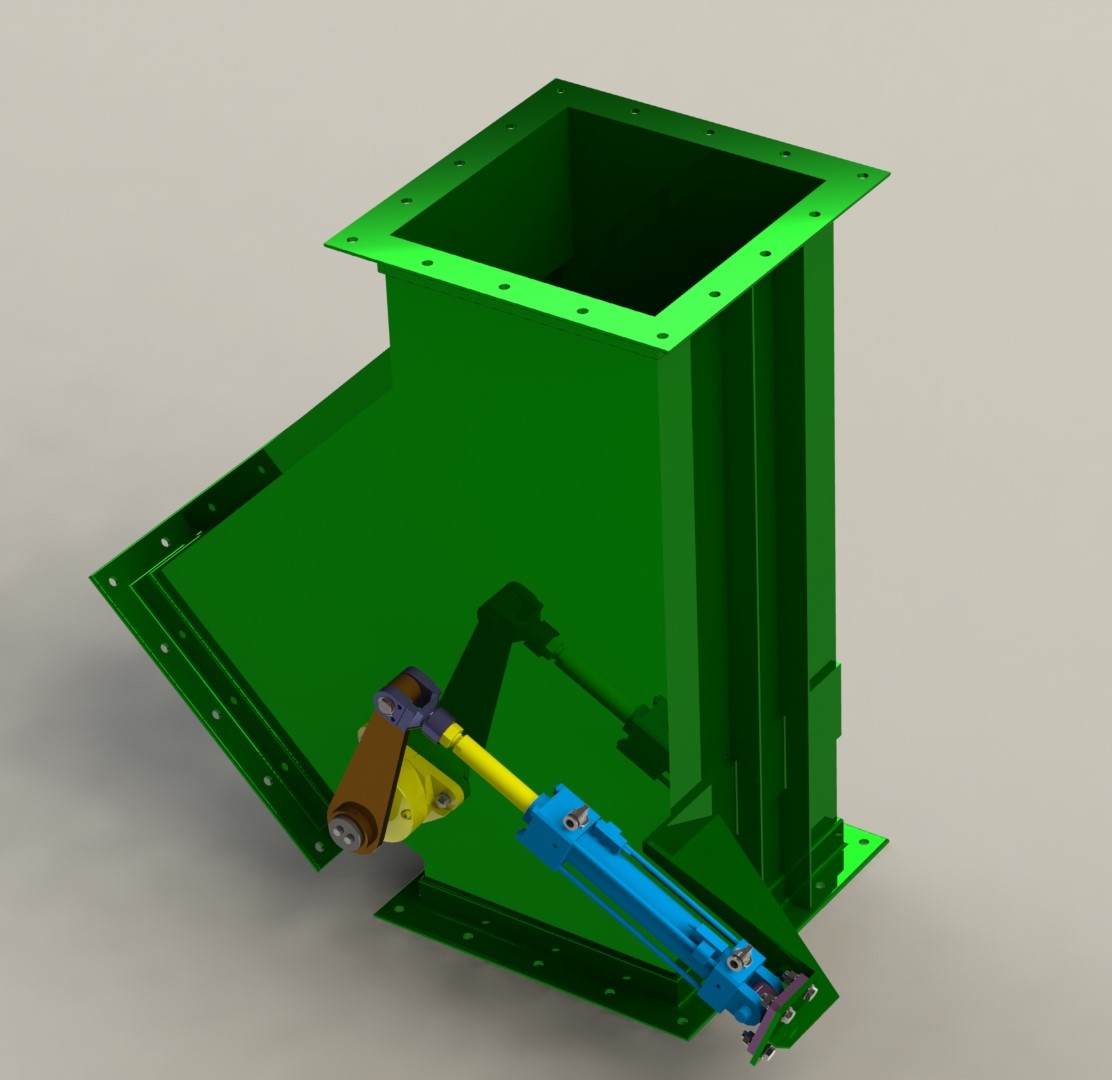
- Flow control elements: Tube diverters (2- and multi-way), Y (pant-leg) diverters, silo-top distribution valves, silo-bottom slide gates, butterfly valves, rotary valves. See Rotary Airlock Valves and Diverters.
- Automation: Pressure, air velocity and flow monitoring; silo level control; blockage detection and automatic purge; recipe and target-silo selection via SCADA.
Typical Application Range
- Capacity: 0.5 – 100 t/h; distance up to 1,000 m; lift up to 50 m
- Materials: flour, sugar, starch, feed, milk powder, plastic granules and powder, cement, fly ash, lime, soda, PVC, mineral powders, pellets
- Pipe diameter: DN 50 – DN 300
- Standards: CE Machinery Directive, ATEX 2014/34/EU (explosive dusts), EN 1672-2 and FDA-compliant food design, PED (pressure vessels)
Advantages
- Enclosed and dust-free: No contamination or product loss; hygiene assurance in food and chemicals.
- Flexible routing: Pipeline runs horizontally, vertically and around obstacles to suit the existing layout.
- Low maintenance: Few moving parts; less maintenance and downtime than mechanical conveyors.
- Automatic distribution: One line routed to multiple silos; automatic recipe-based feeding.
Why NEO MAKİNA?
The system is designed by air-velocity, pressure-drop and pipe-diameter calculation from material characterisation (bulk density, particle size, moisture, abrasiveness, fragility), capacity and route. Blower, feeding, pipeline, filter, valves and automation are delivered from a single source; for hybrid solutions with mechanical handling see Mechanical Conveying Systems.
Frequently Asked Questions
Dilute or dense phase?
Dense phase for fragile or abrasive material, long distance and high capacity; dilute phase is more economical for light, non-fragile material over short distances.
What is the energy consumption?
5–15 kWh/t in dilute phase, 2–6 kWh/t in dense phase (distance-dependent); higher than mechanical conveying but with dust-free, hygienic and flexible operation.
Can pneumatic filling be added to my existing silos?
Yes. By adding silo-top filters, level sensors and diverter valves, pneumatic filling from tankers or the process line is provided.
For pneumatic conveying design and a quotation based on your material and route, contact us.