
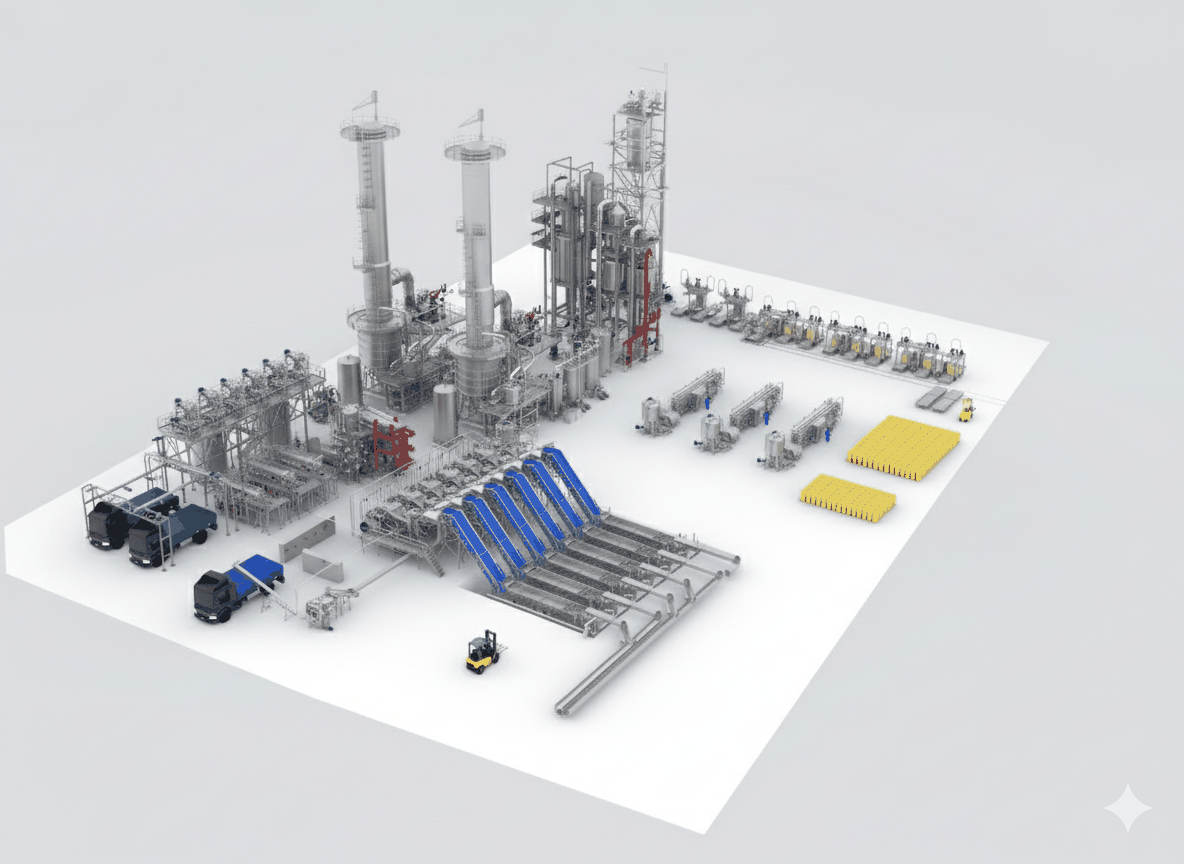
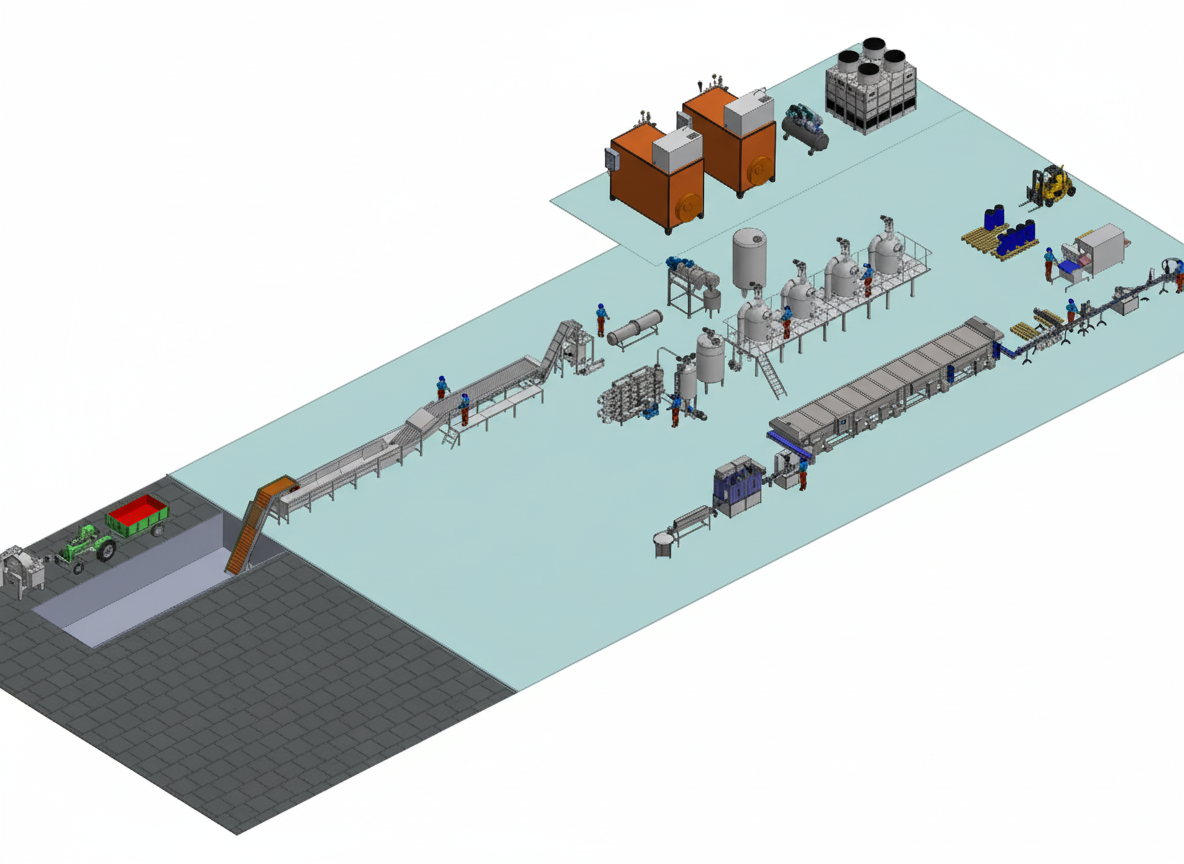
NEO MAKİNA ve MÜHENDİSLİK A.Ş. builds turnkey tomato paste processing plants from tomato reception to aseptically filled 28–30 or 36–38 Brix paste. Comprising flume washing, hot/cold break, turbo refiner, multi-effect vacuum evaporator and aseptic filling, the plant delivers low operating cost through a low-temperature process that preserves lycopene and colour and TVR/MVR steam economy. Our references include a 120 t/day tomato paste and ketchup plant.
Process Flow
1. Reception and Washing
- Hydraulic flumes: Water unloading from trucks and flotation transport; no mechanical impact, soil and stone separation.
- Bubble washer: Air turbulence removes surface dirt; water recirculation and filtration.
- Sorting: Roller inspection belt; optional optical colour sorter to eliminate rotten and green tomatoes.
2. Crushing and Thermal Inactivation (Hot / Cold Break)
- Chopper pump: Tomatoes converted to coarse purée.
- Hot break (95 °C+): Pectinase enzymes (PME, PG) fully inactivated; high-viscosity paste and ketchup raw material without serum separation.
- Cold break (65–75 °C): Partial enzyme activity; more fluid, brighter colour and fresher taste.
- Technology: Heating in under 30 seconds in tubular exchangers under turbulent flow; heat recovery.
3. Refining (Pulp and Fibre Separation)
- Two-stage turbo refiner: 0.4–1.2 mm screens separate skins and seeds; smooth purée, yield above 95%.
- Waste utilisation: Skin-seed waste is pressed for animal feed or biogas feedstock.
4. Vacuum Evaporation and Concentration
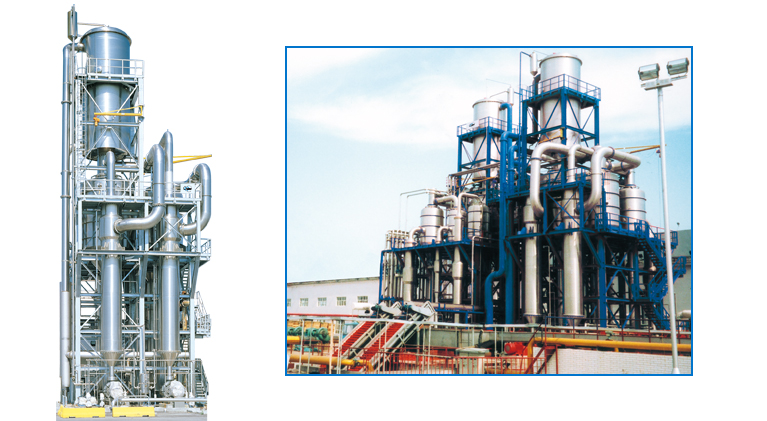
- Falling-film / forced-circulation evaporator: 5–6 Brix juice concentrated to 28–30 or 36–38 Brix paste in a multi-effect (2–4 effects) evaporator.
- TVR / MVR: Thermal or mechanical vapour recompression for steam economy; 4–5 kg water evaporated per kg of steam.
- Low temperature: Boiling at 45–65 °C under vacuum; lycopene, colour and flavour preserved, no cooked taste.
5. Sterilisation and Aseptic Filling
- Tube-in-tube steriliser: Concentrate flash-heated to 105–115 °C, held and cooled to 35 °C under aseptic conditions.
- Aseptic filling: Steam-barrier filling head into 220 L bag-in-drum or 1,000 L bag-in-box sterile bags; 24-month ambient shelf life.
- Alternative: Can/glass hot-fill and pasteurisation line for retail.
Typical Application Range
- Capacity: 100 – 2,000 t/day tomato processing (24 h)
- Products: hot-break and cold-break paste (28–30, 36–38 Brix), tomato juice, diced tomatoes, ketchup raw material
- Steam consumption: 0.25–0.30 kg steam per kg water evaporated with TVR
- Materials: product-contact surfaces AISI 304/316L; CIP-compatible hygienic design
- Standards: CE Machinery Directive, PED (evaporator and steriliser), ISO 22000/HACCP compliant layout
Why NEO MAKİNA?
- Energy efficiency: As a boiler and heat-exchanger manufacturer, the evaporator-boiler-condensate system is designed as one; lowest steam and water consumption per tonne.
- Product quality: Correct break temperature and low-temperature evaporation give high viscosity, bright colour and preservative-free product.
- Flexibility: Paste, tomato juice and ketchup in the same plant; integrated solution with Ketchup Processing Plants.
- References: 120 t/day tomato paste and ketchup plant and the İnhisar/Bilecik integrated plant engineering.
- Single-source delivery: Feasibility, process design, equipment, utilities (boiler, water, cooling), installation, automation, commissioning and in-season support.
Frequently Asked Questions
How many tonnes of tomatoes per tonne of paste?
From 5.5 Brix tomatoes, about 5.5–6 t for 28–30 Brix paste and 7–7.5 t for 36–38 Brix.
Hot break or cold break?
Hot break for ketchup and thick paste; cold break for tomato juice, lighter paste and fresh taste. The line runs in both modes.
What does the plant do off-season?
Year-round use is possible with ketchup/sauce production from aseptic paste, fruit purée or concentrate processing; the line is engineered accordingly.
For paste plant design and a quotation based on target capacity and product type, contact us.