
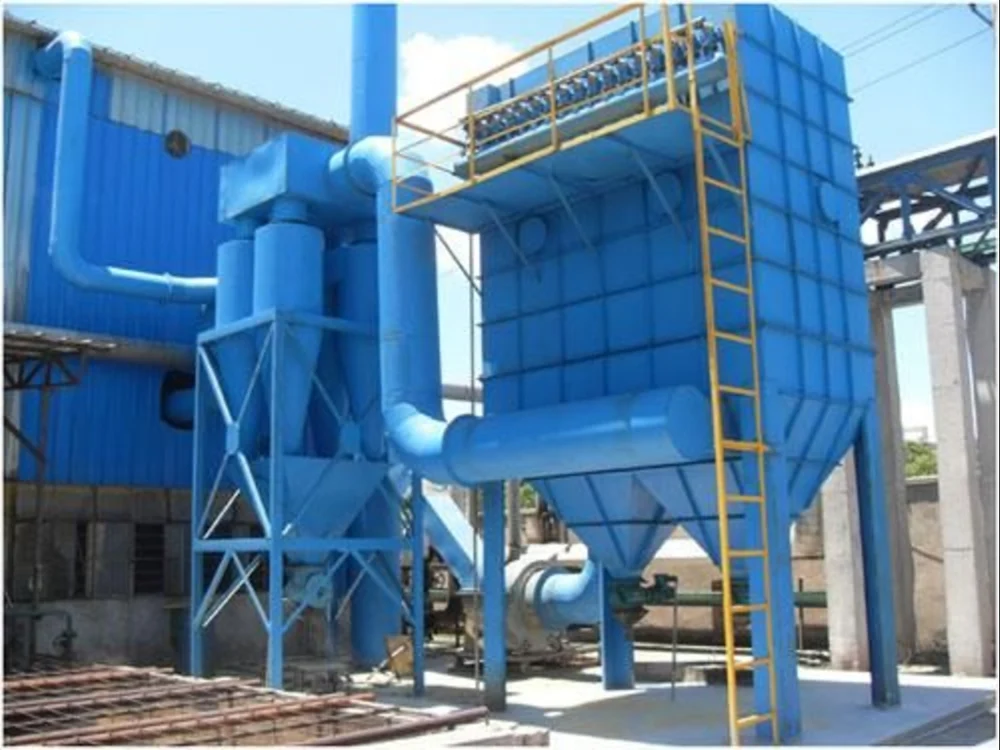
NEO MAKİNA ve MÜHENDİSLİK A.Ş. designs, manufactures and installs industrial dust collection and filtration systems that capture dust at source on production floors and process stacks. Jet-pulse bag filters, cyclones, cartridge filters and oil-mist separators secure occupational health, product quality and emission limits at the same time in cement, mining, steel, wood, food and chemical plants.
How Does a Dust Collection System Work?
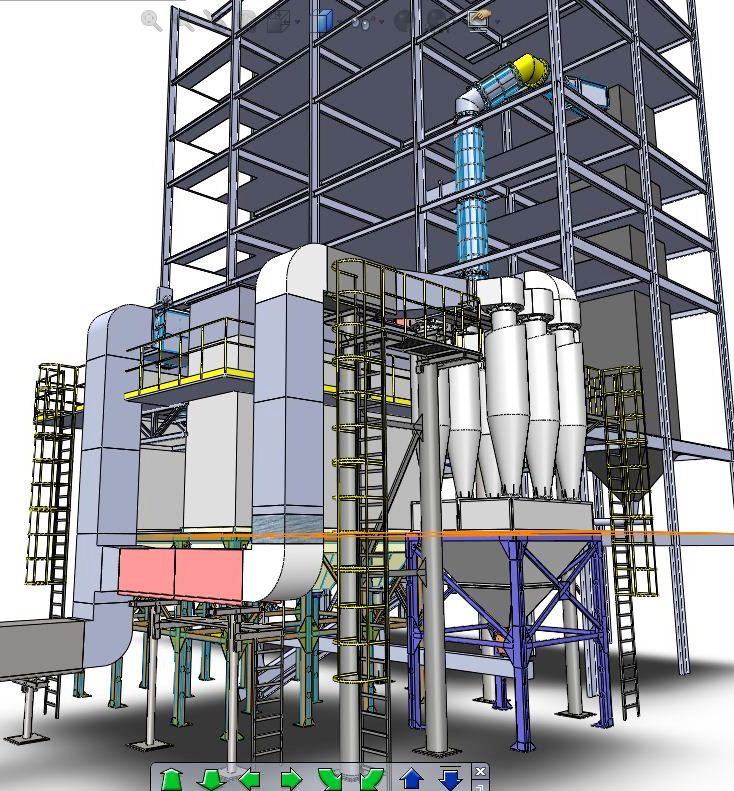
Air drawn from hoods or enclosures at the dust source is carried by ductwork to the filter unit. Coarse particles are removed in a cyclone, fine particles in a bag or cartridge filter; clean air is discharged through the fan to the stack or returned to the room. Collected dust is returned to the process or a container via rotary valve and screw.
System Solutions
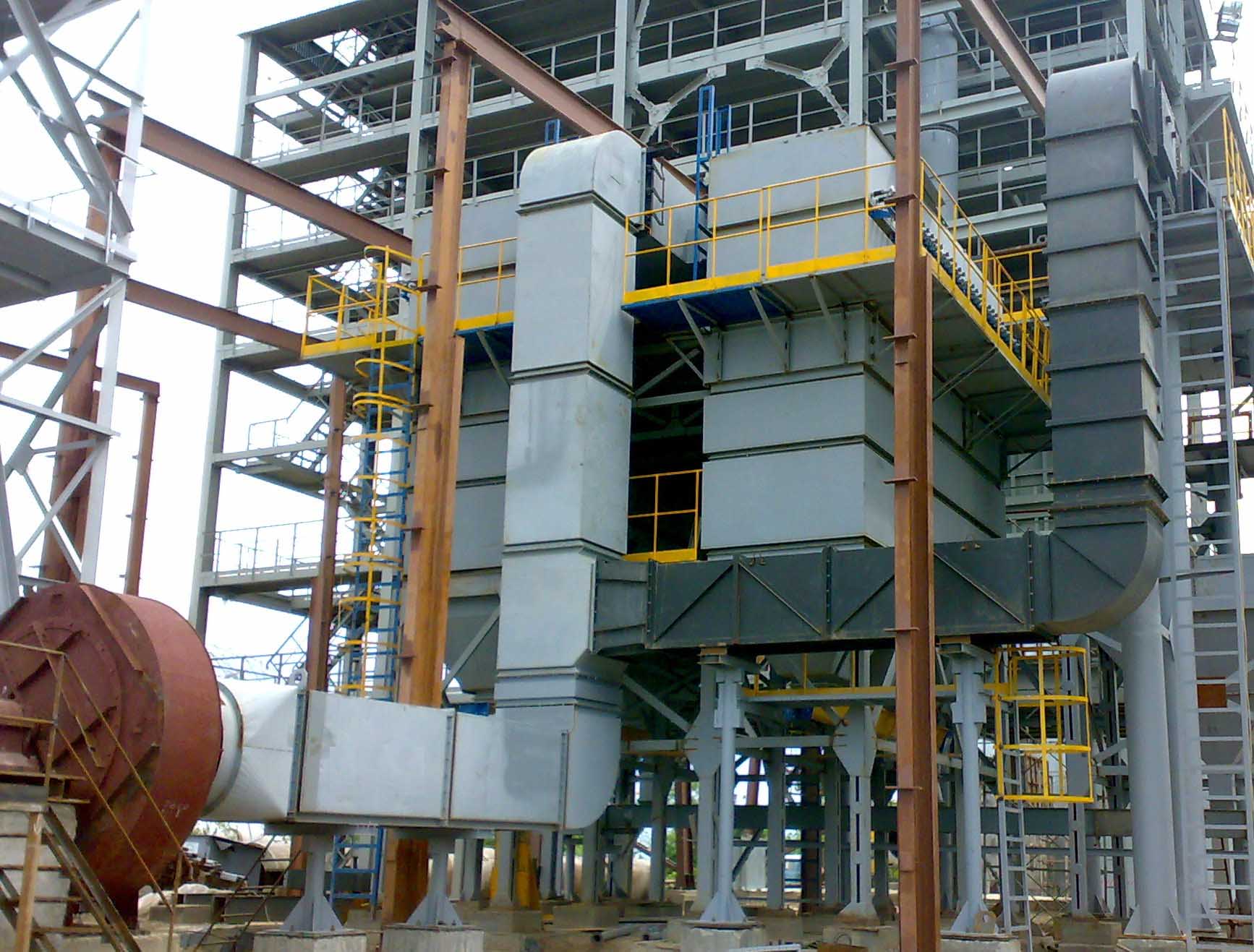
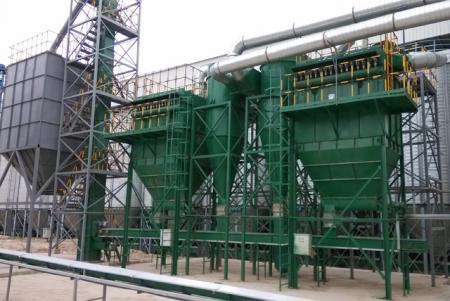
Jet-Pulse Bag Filters
- Efficiency: Up to 99.9% capture of sub-micron particles; stack outlet below 5–10 mg/Nm³.
- Automatic cleaning: PLC and differential-pressure controlled compressed-air pulses; continuous operation at constant pressure drop.
- Bag media: Polyester, aramid, PPS, PTFE-membrane; selected for 130–260 °C temperature and chemical resistance.
- Construction: Carbon or stainless steel housing, explosion vents (ATEX), insulation and heating options.
- Applications: Cement and lime mills, steel arc furnaces, boiler flue gas, flour and feed mills, sand and mineral crushing-screening.
Industrial Cyclones and Multicyclones
- Separate coarse dust above 5–10 microns by centrifugal force; pre-separator before bag filters or stand-alone product-recovery unit.
- No moving parts, low maintenance; process gas up to 1,000 °C with refractory lining.
- High dust loads (above 100 g/Nm³) on dryers, roasters and pneumatic conveying lines.
Cartridge Filters and Dust Extraction Booths
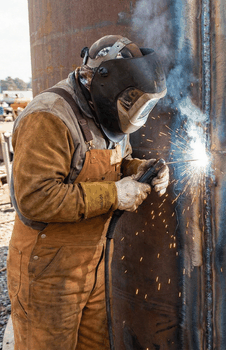
- Compact units for welding fume, grinding, blasting, paint dust and powder-coating booths.
- HEPA final filter (H13/H14) with 99.97% capture at 0.3 microns; air can be returned to the room.
Oil-Mist and Fume Filters
- Electrostatic precipitator or coalescing filter captures over 95% of oil aerosols on CNC, press and heat-treatment lines.
Engineering Approach
- Dust characterisation: Particle size, moisture, stickiness, explosibility (Kst, Pmax) and temperature determine filter type and air-to-cloth ratio.
- Duct and hood design: Transport velocities (18–25 m/s by dust type), capture velocity and pressure-drop calculation; flow verified by CFD.
- ATEX compliance: Explosion vents, flame-back isolation valves, spark extinguishing and antistatic bags for explosive dusts.
- Automation: Differential pressure, bag-leak detector, fan VFD control and energy monitoring; SCADA integration.
Typical Application Range
- Air flow: 2,000 – 500,000 m³/h
- Gas temperature: ambient – 260 °C (bag filter), up to 1,000 °C (refractory cyclone)
- Outlet emission: <10 mg/Nm³ (bag/cartridge), clean-room class with HEPA
- Standards: national industrial air-pollution regulation, EN 16770, ATEX 2014/34/EU, EN 14491 (explosion venting)
The NEO MAKİNA Difference
Site survey and measurement, dust analysis, system design, manufacture, installation, commissioning and emission testing are handled from a single source. Capacity upgrades of existing filters, bag replacement and energy-efficiency retrofits are also within scope.
Frequently Asked Questions
Bag filter or cartridge filter?
Bag filters for high dust load, moisture and temperature; compact cartridge filters for low load, fine dry dust (welding fume, grinding).
How often are filter bags replaced?
2–4 years at the correct air-to-cloth ratio (1.0–1.5 m/min) and media; differential-pressure trending predicts replacement time.
Can collected dust be returned to the process?
Yes. In cement, flour, feed and chemical plants collected dust is returned via rotary valve and screw, reducing product loss.
For a system design based on your plant's dust sources and a quotation, contact us.