
NEO MAKİNA ve MÜHENDİSLİK A.Ş. builds turnkey feed production plants (feed mills) for poultry, cattle, small-ruminant and fish feed. From raw-material intake through grinding, dosing, mixing, conditioning, pelleting, cooling and bagging, the whole line is engineered for hygiene, pellet quality (PDI) and energy per tonne. It scales from 1 t/h farm plants to commercial mills above 50 t/h.
Process Flow
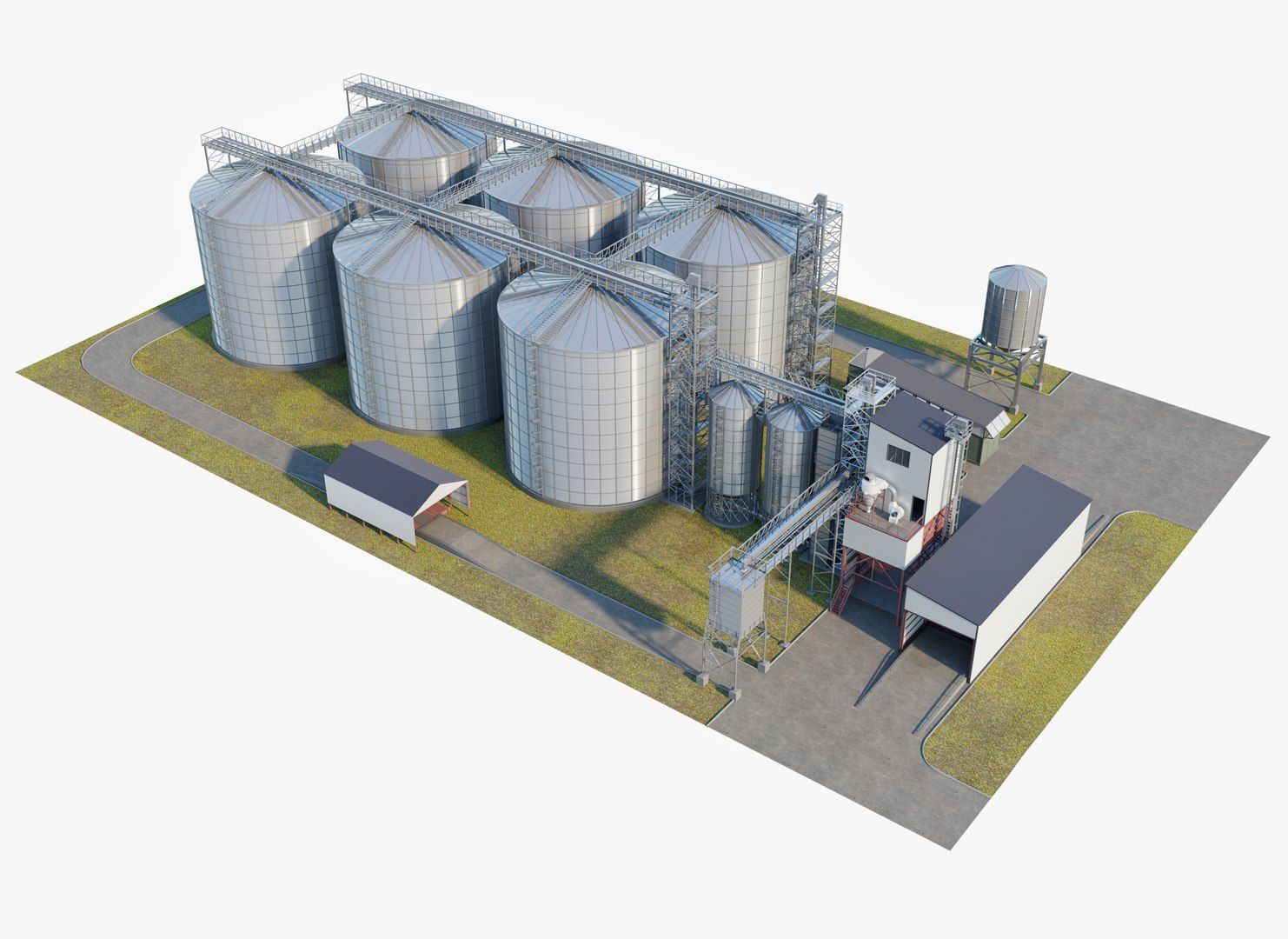
- Intake and storage: Weighbridge, intake pit, pre-cleaner, magnet and raw-material silos (steel or concrete).
- Grinding: Hammer mill grinds grains to 0.8–3 mm; aspiration and dust filter.
- Dosing: Macro ingredients weighed in a load-cell hopper, micro ingredients (vitamins, minerals, premix) in a micro-dosing unit, automatically by recipe.
- Mixing: Twin-shaft paddle or single-shaft ribbon mixer; 1:100,000 homogeneity (CV < 5%) in 60–120 seconds; liquid (oil, molasses) addition.
- Conditioning and pelleting: Steam conditioner heats to 80–90 °C for starch gelatinisation; ring-die pellet mill produces 2–12 mm pellets.
- Cooling and crumbling: Counter-flow cooler brings pellets to ambient +5 °C; optional crumbler and screening.
- Storage and dispatch: Finished-product silos, bagging (25–50 kg), big-bag or bulk-truck loading.
Plant Configurations
Farm and Boutique Plants
- Capacity: 1 – 5 t/h; compact layout, mash and pellet production.
- On-farm ration production, specialty and organic feed businesses.
Commercial Feed Mills
- Capacity: 10 – 50+ t/h; fully automated, multi-line (separate poultry/cattle/fish) layout.
- Continuous flow from intake to bulk loading; traceability and recipe management.
Key Equipment and Options
- Twin-shaft conditioner: High steam absorption and long retention; high gelatinisation for poultry and fish feed.
- Hygieniser: Holds feed at temperature for 2–4 minutes to eliminate Salmonella and E. coli.
- Vacuum coater: Infuses 10–30% oil into pellets for fish and pet feed.
- Extruder: Floating fish feed, pet food and heat-treated soybean production.
- Pellet mill: Wear-resistant alloy dies and rollers; heavy-duty gearbox; automatic lubrication.
- Automation: PLC/SCADA recipe management, smart load control (feed rate by motor current), batch reporting and traceability.
Typical Application Range
- Capacity: 1 – 50+ t/h
- Feed types: broiler and layer, dairy and beef cattle, small ruminants, fish (sinking/floating), pet food, mash
- Pellet diameter: 2 – 12 mm; target PDI > 95%
- Energy: 15–30 kWh/t electricity, 40–60 kg/t steam on the pellet line (by feed type)
- Standards: CE Machinery Directive, ATEX (dust explosion), GMP+ / FAMI-QS compliant layout, feed-hygiene regulations
Why NEO MAKİNA?
- Feed quality: Correct conditioning and die selection for high PDI, low fines and improved feed conversion ratio (FCR).
- Hygiene: Mixer and line designed on the zero-cross-contamination principle; safe changeover between medicated and non-medicated feed.
- Energy and operating cost: Smart load control, variable-speed drives and heat recovery for low cost per tonne.
- References: Domestic and international projects including a feed mill with 5 t/h steam boiler in Erbil.
- Single-source delivery: Feasibility, process design, steel structure and silos, equipment, installation, automation, commissioning and training.
Frequently Asked Questions
Pellet or mash feed?
Pellets give less waste, better digestion and hygiene and are standard for poultry and fish. Mash/granular feed is also common for cattle; the line is designed to produce both.
How much steam is needed?
Pelleting needs 40–60 kg of saturated steam (3–8 bar) per tonne; a boiler of about 600 kg/h is sufficient for a 10 t/h line.
What is the project duration?
For a 10 t/h plant, engineering and manufacturing take 5–7 months, installation and commissioning 3–4 months.
For plant design and a quotation based on your target feed type and capacity, contact us.